
Experimental Design
Move from question to protocol in minutes. Benchling AI helps you design your next experiment by suggesting conditions, optimizing variables, flagging confounds, and pulling in relevant prior work. You can plan with confidence without ever leaving your notebook.
Experimental design, grounded in your data
Context-aware design
Benchling already holds your structured, scientific data, so experimental design isn't starting from a blank page. It can ground suggestions in your own historical data, reagents, and what's worked before, to provide informed advice.
No handoff between planning and doing
The experiment you design lives where you run it. Protocols flow straight into execution, results flow back to shape what's next, and nothing gets lost in translation.
Reproducible by default
Structured design within Benchling means experiments are captured with proper controls, variables, and metadata from the start — flagging confounds early and making runs reproducible and audit-ready.
Explore AI Experimental Design prompts

Plate layout optimization
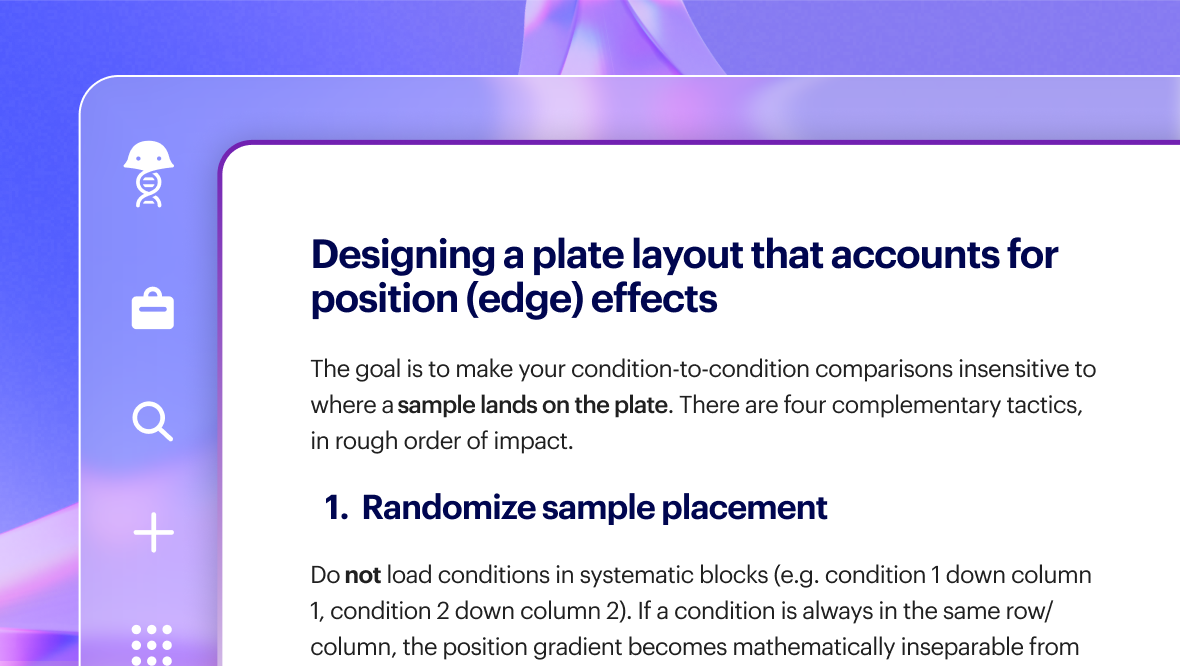
My assay drifts across the plate — edge wells read differently from the center. How do I lay out samples and controls to correct for position effects?
Assay optimization
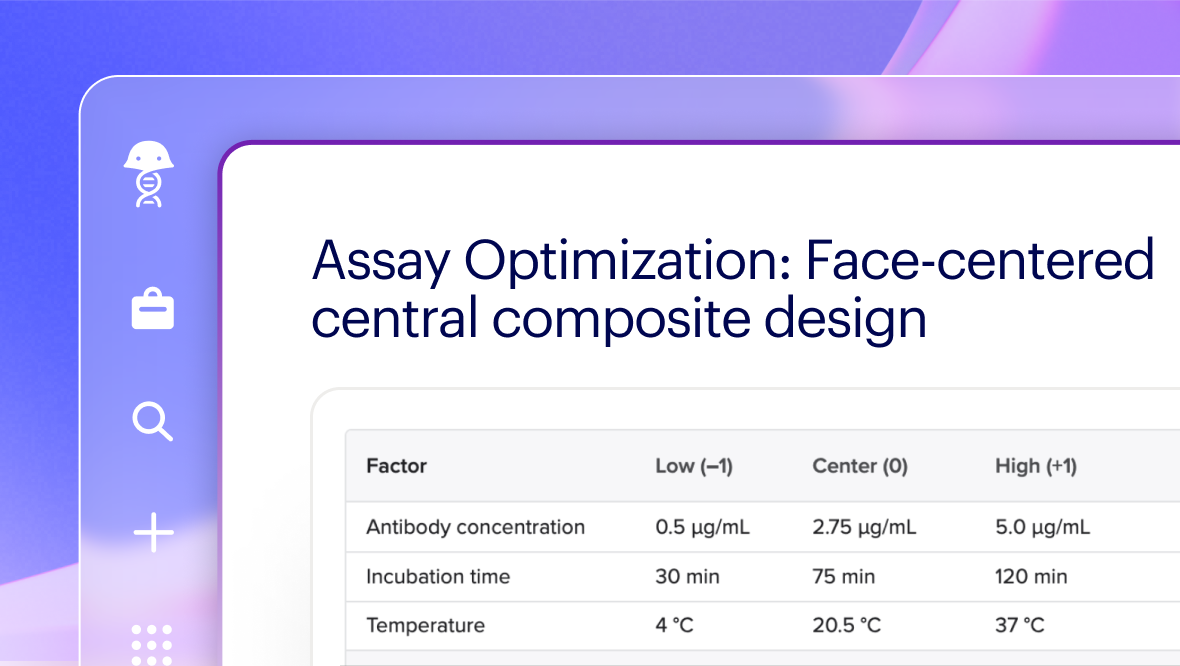
I want to optimize my binding assay by varying antibody concentration, incubation time, and temperature. What design lets me find the best signal-to-noise in a single plate?
Hit confirmation
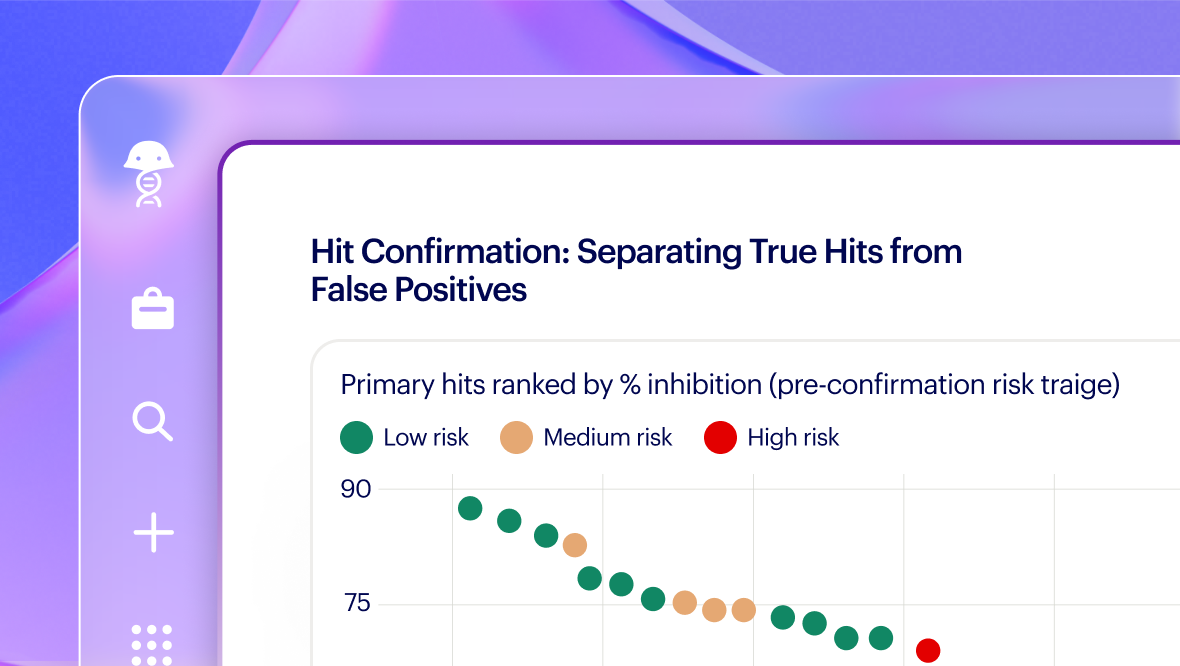
I got 50 hits from my primary screen. How do I design a confirmation experiment to separate true hits from false positives, and how many replicates do I need?
Learn how teams are using AI