White paper


Biotech R&D moves fast, and your data can't afford to lag behind it. Spending months implementing a system that won't scale past this year is time you don't have for science.
Benchling's unified R&D Cloud gives your team one place to capture data, collaborate, and make decisions faster. Benchling for Startups gets you those tools now and grows with you as your team does.

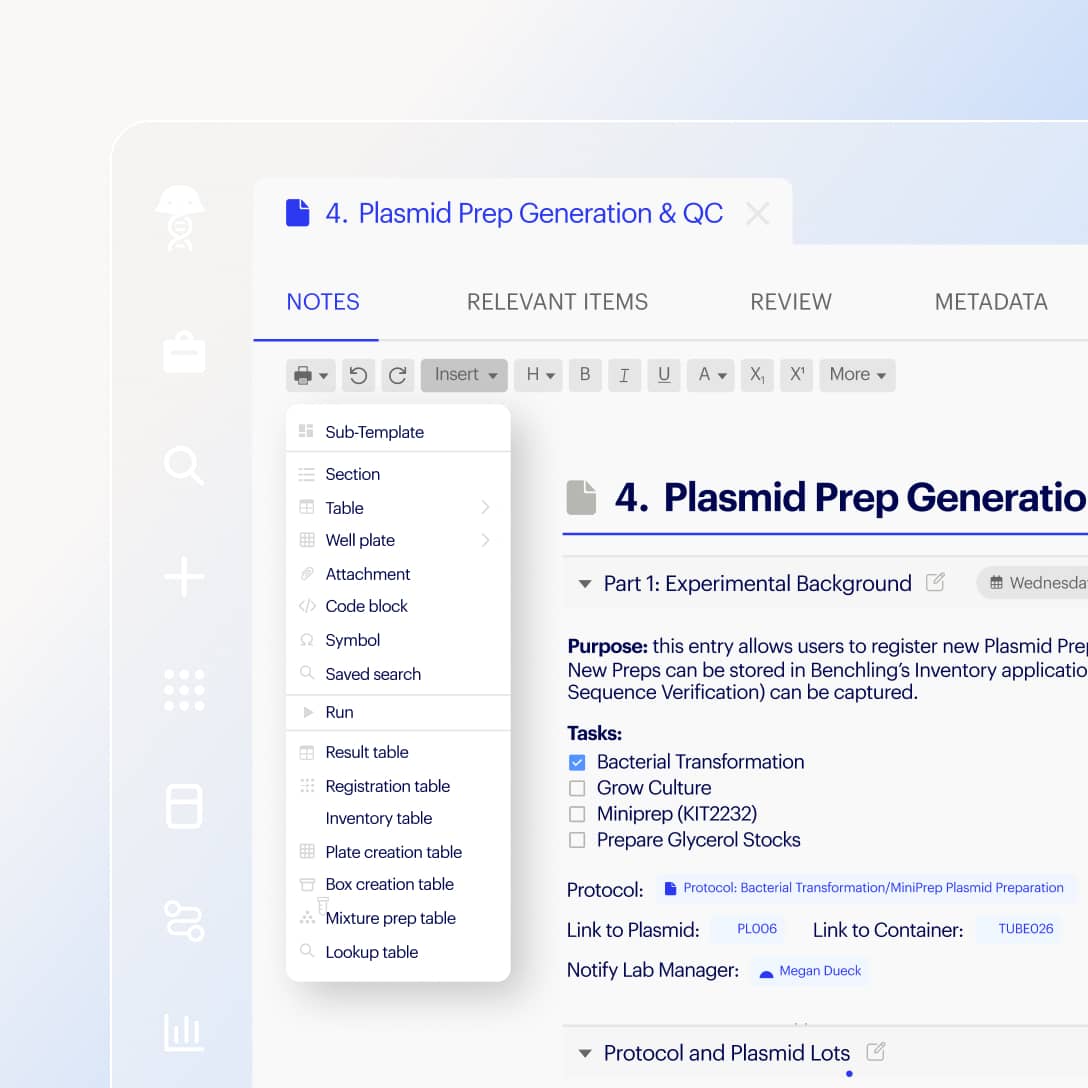
More than a digital notebook. Centralize every experiment using spreadsheets, images, sequences, protocols, and notes. Automatic timestamps and version history included. Build a template once, and your whole team runs experiments the same way.
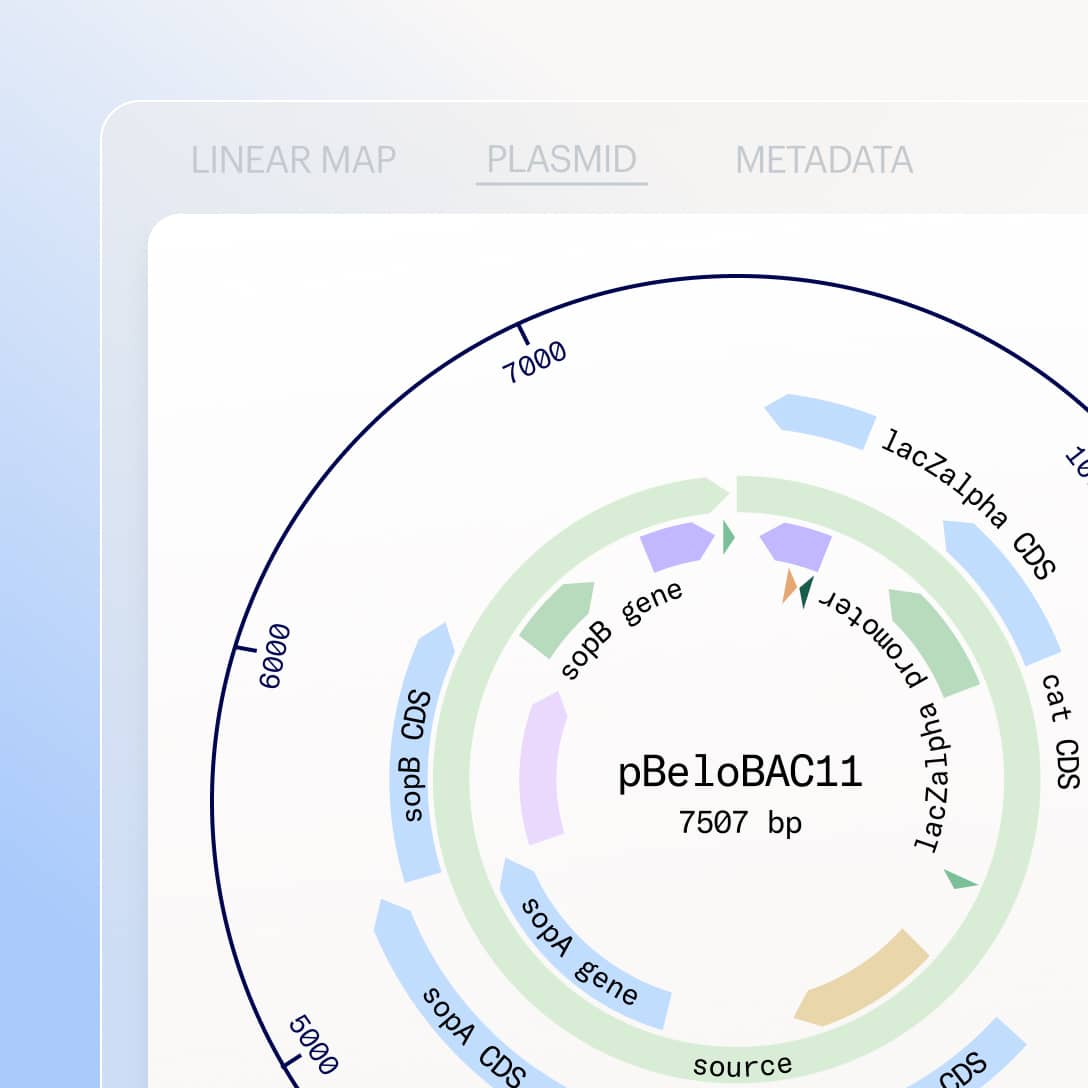
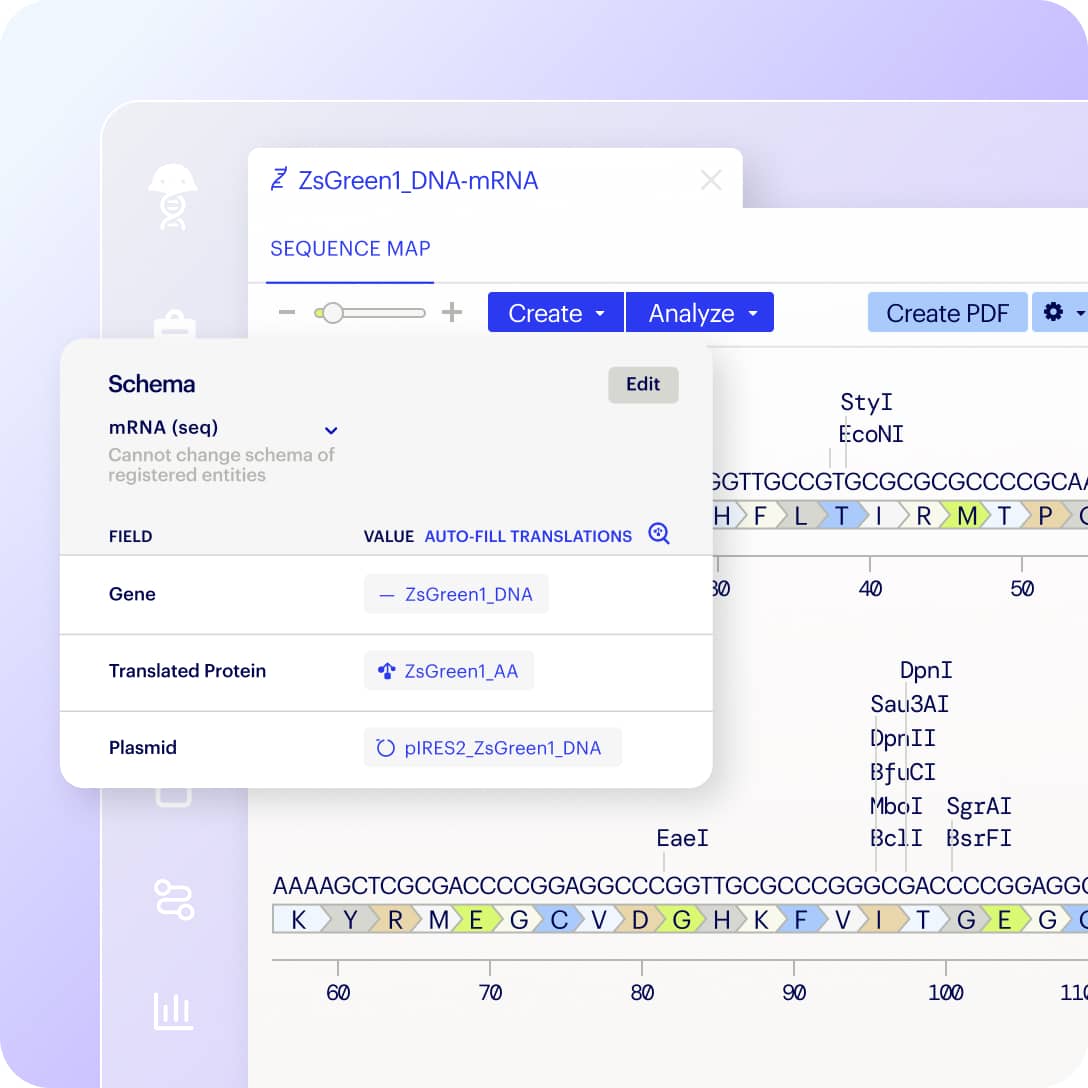
A modern suite for sequence design and analysis, with 10+ tools in one interface. Run CRISPR design, cloning, alignments, primer design, and auto-annotation, then link sequences straight to your notebook entries or share them with your team.
A bio-aware registry that models and tracks every molecule you work with — proteins, small molecules, cell lines, and more — with no code required. Registry enforces uniqueness so duplicates can't happen, maps lineage across every entity, and connects directly to your notebook and inventory.
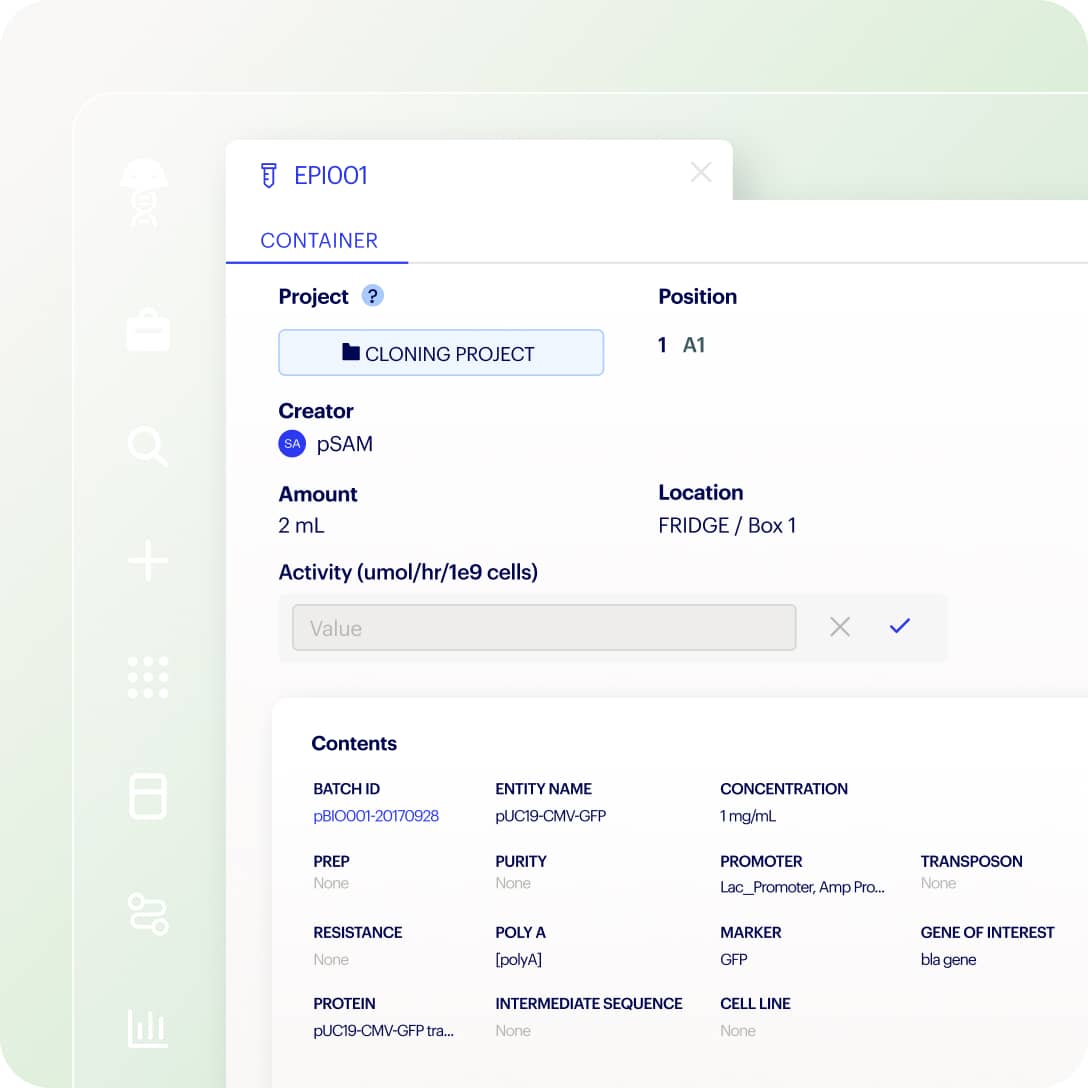
Track the location, amount, and full experimental history of every sample and reagent, connected to the data that created it. Trace any result back to its source in seconds.
Choose a pre-packaged, fixed-scope implementation to get your lab running on Benchling fast, so you can focus on research. Built from best practices across more than 700 implementations, with support from our team from day one.






We’re investing a fairly large amount of capital into Benchling because we believe that every last data point must be collected. We’re asking data questions no one has asked because no one really could before.
Founder & CTO, Oobli
Qualifying criteria:
15 or fewer scientists
Less than $25M in funding
Be a new Benchling customer
Benchling for Startups isn't free, but it's priced carefully for early-stage teams — a fraction of standard enterprise pricing, with the full platform available from day one instead of a stripped-down trial. Qualifying companies get quick-start access to Benchling's R&D data platform without the cost structure built for later-stage biopharma.
Yes. Benchling scales down as easily as it scales up. A team of two or three scientists gets the same registry, notebook, and inventory tools that a 500-person R&D org uses, without needing an informatics hire to configure it. For small labs, that means less time spent on spreadsheets and file versioning, and more time spent generating and tracking real experimental data.
The program includes access to Benchling's core R&D platform — notebook, molecular biology, registry, and inventory — at startup-friendly pricing, plus onboarding support built for small teams standing up their data infrastructure for the first time. It's designed to get a new lab running on Benchling in weeks, not months.
Standard Benchling plans are built around the workflows of larger, more established R&D organizations with more users, more integrations, and more configuration. Benchling for Startups strips that down to what an early-stage team actually needs on day one, at a price point that matches a startup's runway rather than an enterprise budget. As the company grows past the program's qualifying criteria, it can move into the standard plan that fits its next stage.
A modern R&D stack centralizes experimental data, sample inventory, and sequence or molecule information in one connected system rather than scattered across spreadsheets, shared drives, and paper notebooks. As a biotech scales, that connectivity is what keeps results traceable and reproducible instead of rebuilding institutional knowledge every time headcount doubles.
Most early-stage biotechs need three things in place early: a way to document experiments (an ELN), a way to track samples and reagents (inventory management), and a way to organize biological data like sequences or antibodies (a registry). Getting these in place before headcount grows saves the much larger cost of migrating years of scattered data later.
Even at two or three scientists, an ELN pays off the moment someone needs to reproduce an old experiment, onboard a new hire, or share results with an investor or partner. Paper notebooks and personal folders work until the first time someone's out sick or leaves. An ELN keeps that knowledge with the company instead of with any one person.