Here’s everything we released at Benchtalk 2025
Benchtalk is Benchling’s premier annual conference for the biotechnology industry, featuring two unforgettable days of learning, connection, and discovery. Hundreds of pioneering scientists, R&D leaders, and IT professionals from around the world come together to explore Benchling’s newest innovations, sharpen their skills in hands-on sessions, and share how they’re transforming biotech R&D.
A preview of our big launches at Benchtalk 2025:
Benchling AI: We’re putting AI in the hands of every scientist with agents built for literature search, experimental design, data capture, and more.
Next-generation antibody discovery: Preview end-to-end antibody research with embedded AI models, plus peek at what’s next in our antibody roadmap.
Automation & analysis: Boost throughput, improving data quality, and preparing your org for AI-driven discovery. Explore how we’re allowing scientists to perform analyses in just a few clicks.
Development: Move faster with our new parallel execution and improved PD studies to accelerate development with confidence.
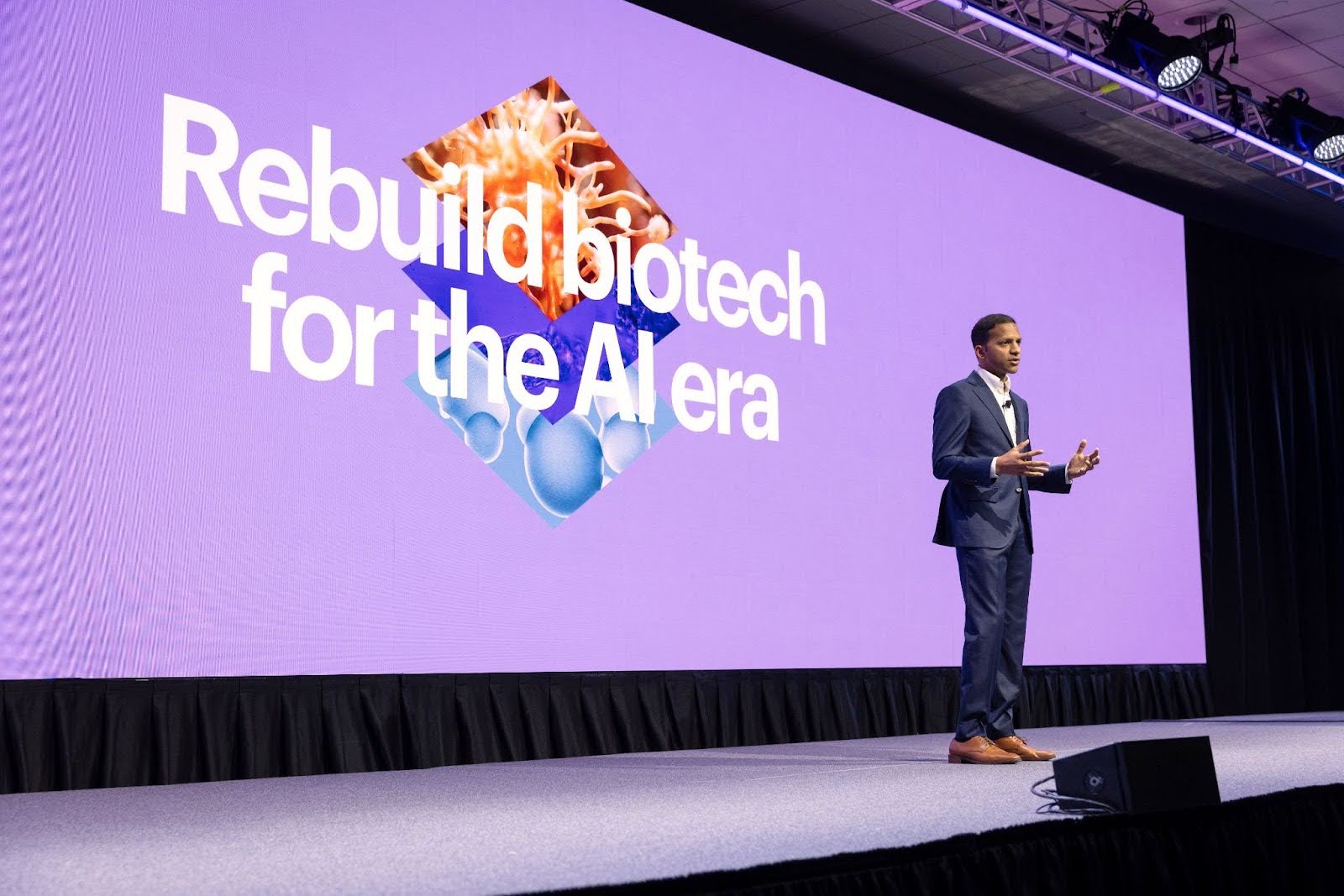
When Sajith Wickramasekara, CEO and cofounder of Benchling, took the stage at Benchtalk 2025, he started with a reflection:
“We’re entering a new chapter for Benchling and for science. AI has arrived like this force of nature, and it’s transforming every pursuit. Today, we're gonna show you Benchling's next chapter, the one where we rebuild biotech for the AI era together.”
Benchtalk is Benchling’s annual multi-day industry conference where we share what’s next in biotech — new capabilities, new ideas, and new ways of working. This year, more than 900 scientists, R&D leaders, and partners gathered in Boston and London for the largest Benchtalk yet. The theme was clear. Science is entering the AI era, and Benchling is helping teams across the industry rise to meet it.
Throughout the day, we revealed our first set of AI agents built for scientific work, breakthroughs in antibody discovery, powerful automation tools, and a connected platform for development. These launches preview the future of biotechnology; a world where data, automation, and intelligence work as one to transform R&D.
As the showcase began, Chief Product Officer Shawna Wolverton summed up the product focus. “Our mission is simple — make science more efficient in and out of the lab. Everything we’ve built across the R&D lifecycle is designed to help teams do more, faster.”
Without further ado, here’s everything we released at Benchtalk 2025.
Benchling AI: AI for every scientist. Breakthroughs for all
“Let’s take work that used to take hours or weeks and make it happen in just minutes.”
That’s how Ashu Singhal, Benchling's cofounder and president, described the mission behind Benchling AI.
Benchling AI is our next big leap — a command center for scientific AI that brings together specialized agents, models, and data in one place. Each agent has been developed to aid with the work scientists actually do: searching literature, designing experiments, capturing data, analyzing results, and making faster decisions. Our newly announced agents include:
Compose Agent: Converts protocols, notes, or attachments into structured notebook entries and templates.
Data Entry Agent: Upload a PDF, Word doc, spreadsheet and the agent cleans, structures and extracts the data.
Ask Mode: A conversational interface that pulls answers from experiments, results, and attachments in seconds..
Deep Research Agent: Pulls from years of notebook entries, results and public literature to answer complex scientific questions.
“Before AI can transform science, it really has to help with these everyday tasks that actually take up so much time,” stated Singhal. “And every scientist, no matter their funding level or whether they can code, deserves access to it.”
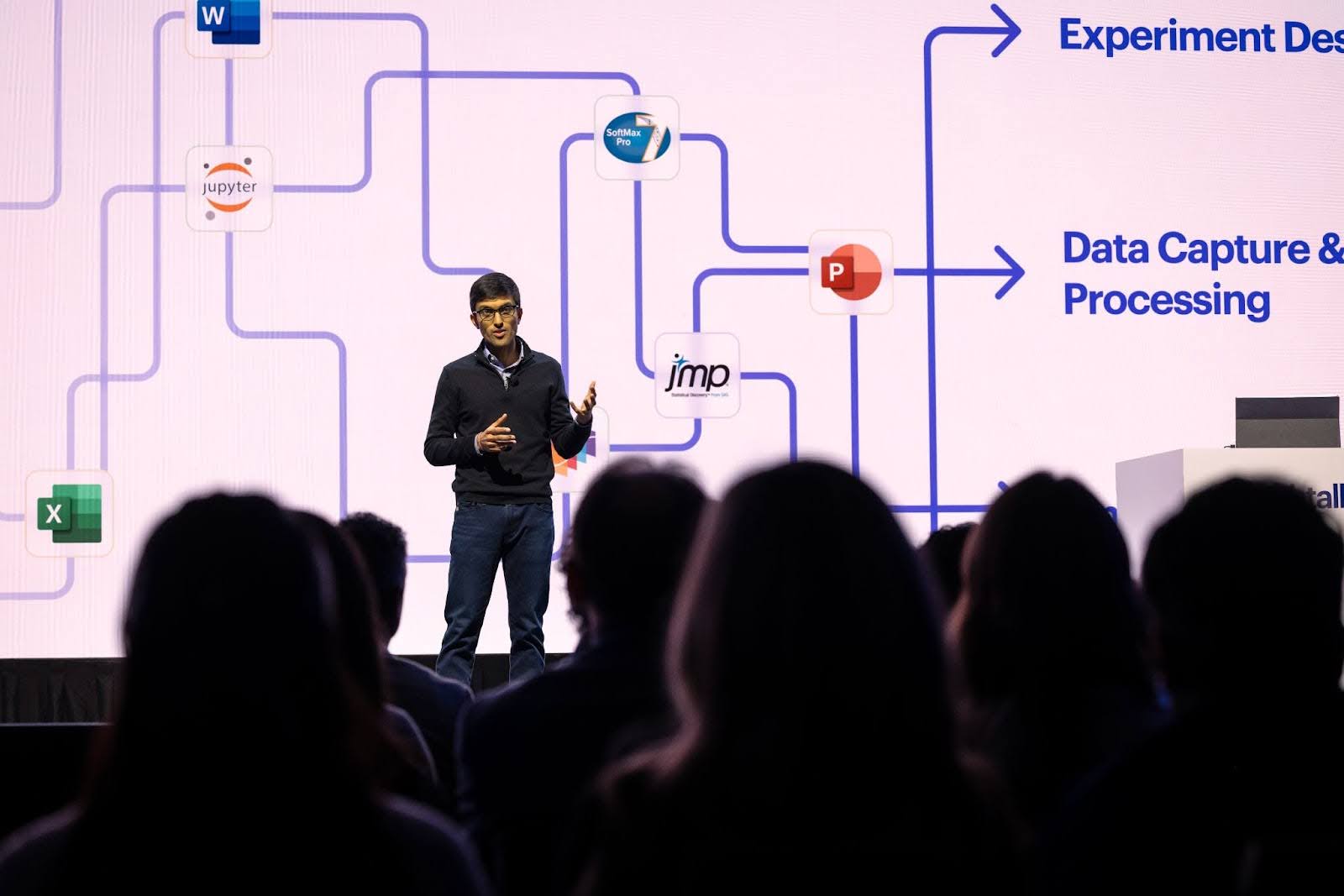
Our AI and ML models go further by helping scientists to predict molecular characteristics and prioritize the most promising candidates, saving both time and resources. With the launch of Benchling Models, users can now directly access the world’s leading scientific models including Boltz, Chai-1, and AlphaFold2 with more coming soon. At its core, Benchling AI is about embedding intelligence directly into the scientific workflow.
Here’s what one R&D leader had to say about the Deep Research Agent:
“I met with the FDA and had a question about stability data come up. It usually takes a day to pull a summary together. I formulated my question and asked Deep Research. 15 mins later I got a brilliant report with inventory, latest stability timepoint and results, etc. The best part? I can export to Word and share with the team before meeting.”
Read more about how Benchling AI is redefining science with Benchling Agents and Models.
Introducing Benchling Biologics — next-generation antibody discovery
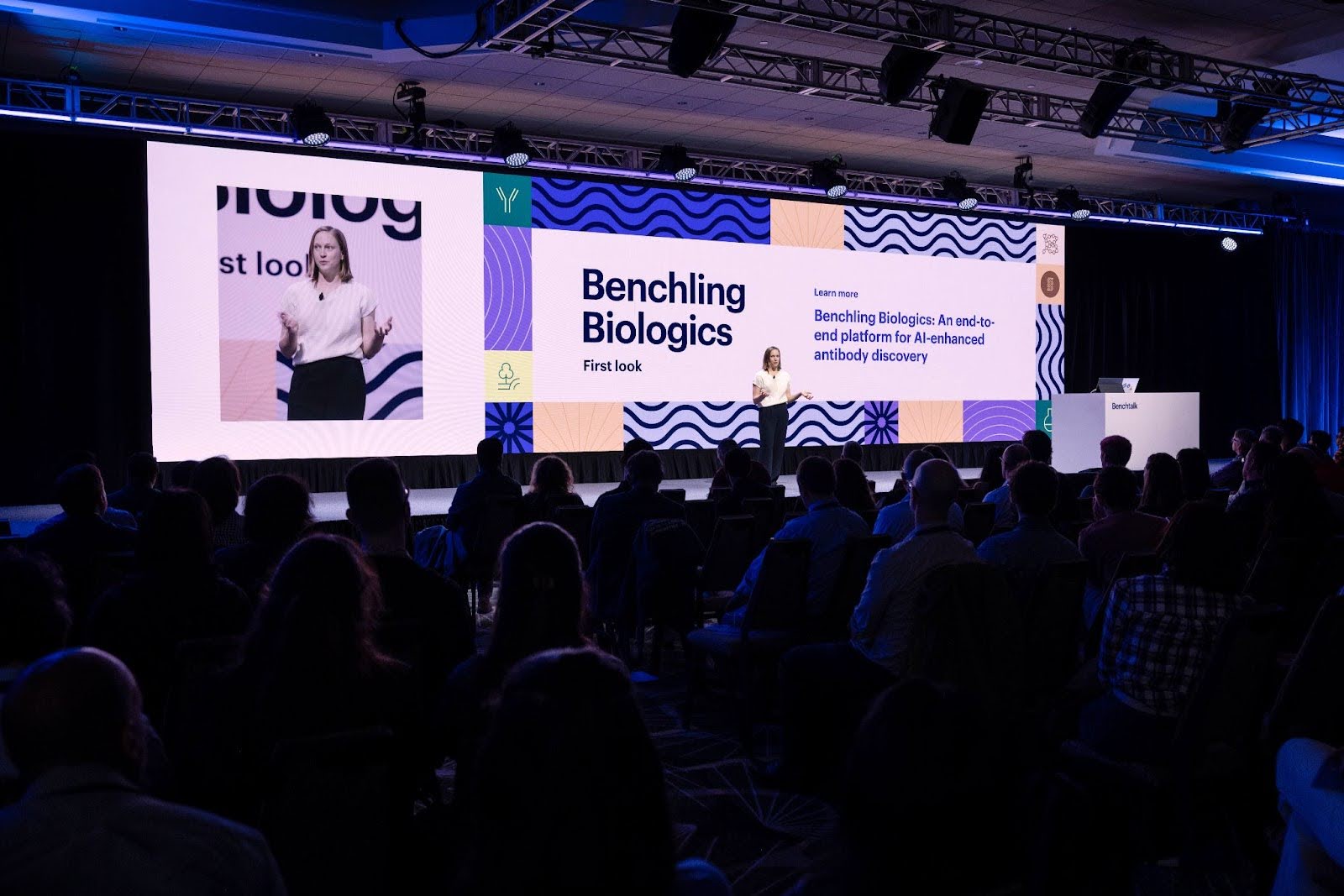
Antibody innovation is exploding, but the tools supporting it haven’t kept pace. Traditional registration platforms lack the flexibility to handle emerging formats, while sequence and functional data sits in silos. Wet and dry lab teams struggle to access shared datasets and models which slows down collaboration and decision-making.
At Benchling, we saw an opportunity to tackle these challenges altogether. Last year, we acquired PipeBio, pairing its bioinformatics suite with Benchling’s platform to bring a modern, cutting-edge approach to antibody discovery.
This year, we are launching Benchling Biologics, our new end-to-end solution for antibody R&D — one that connects sequence registration, structure prediction, and developability analytics all in a single, AI-enhanced workflow. By uniting tools like PipeBio and Benchling, scientists can now move from sequence to candidate in a connected environment.
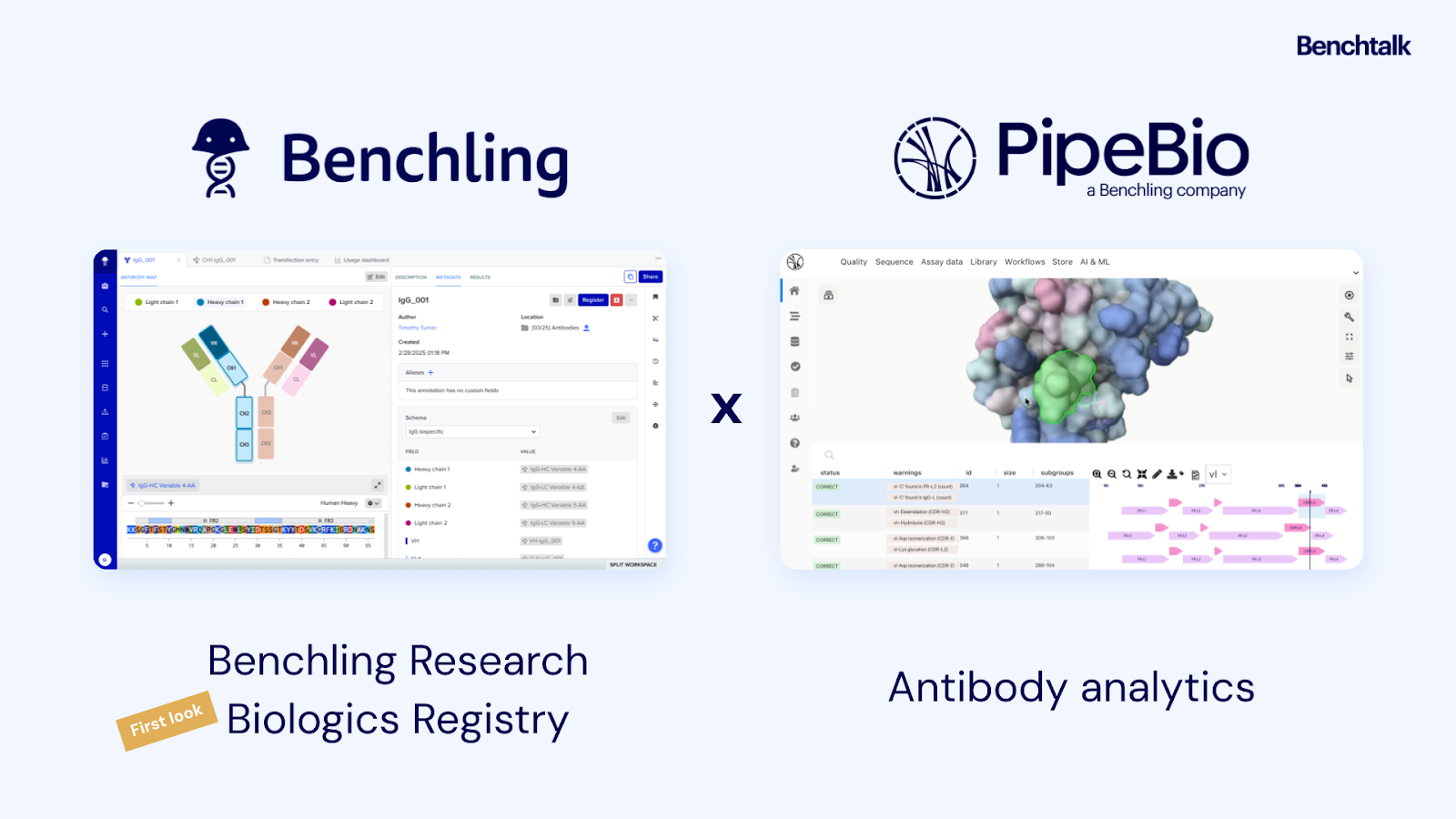
As Lily Helfrich, Product Manager of Scientific Modalities, explained on stage: “Antibody discovery has always been data-rich but it’s often disconnected. We’re building the connective tissue between all of it.”
Benchling Biologics lays the foundation for the next generation of biologics R&D, where wet and dry lab teams can work from the same data, models, and overall platform. And with a roadmap focused on multimodal support and smarter data management, this is just the beginning.
Dive deeper into how Benchling Biologics is transforming the next generation of antibody discovery.
Lab in the loop: End-to-end automation and analysis
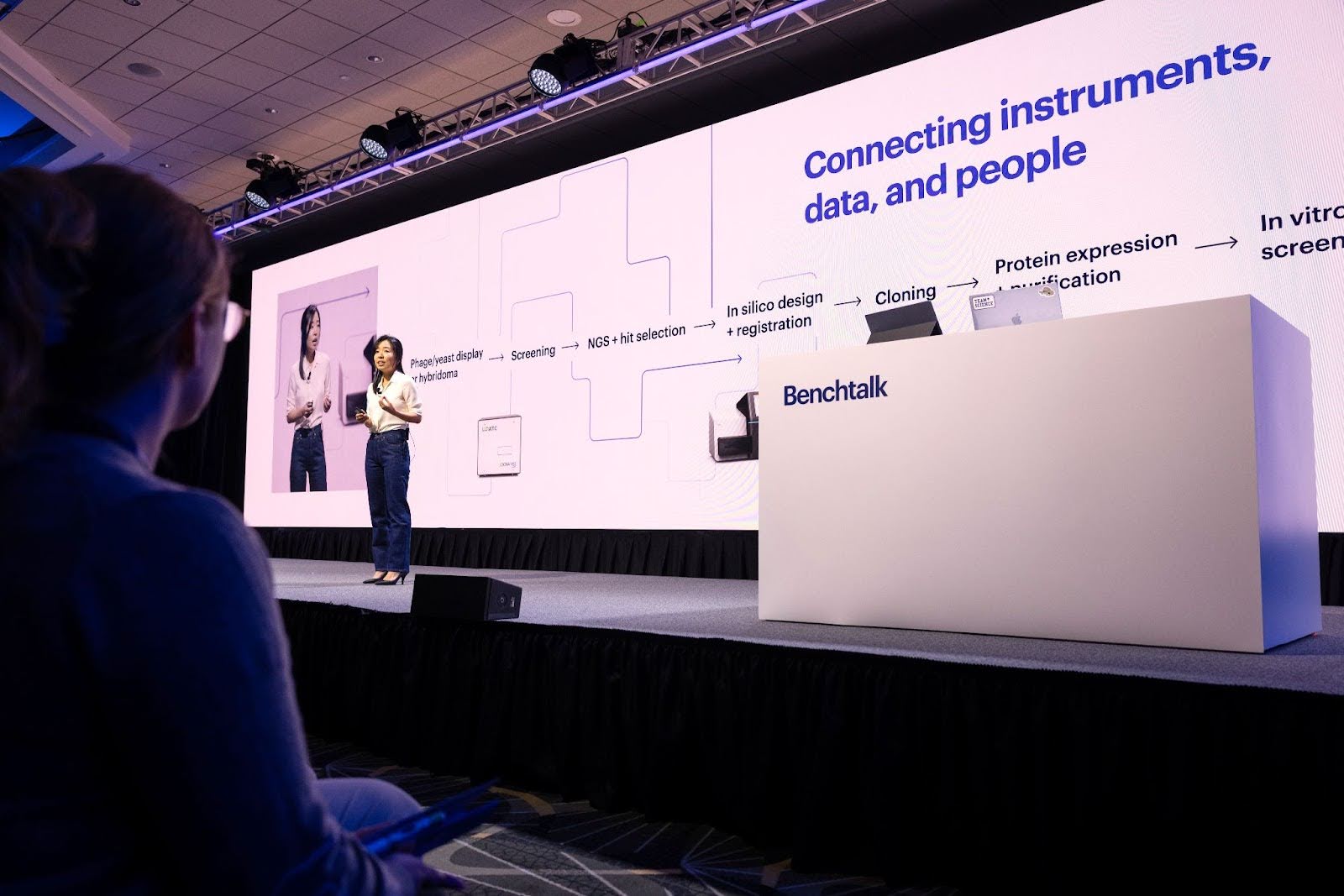
Labs today still run on a patchwork of spreadsheets, Python scripts, and one-off automations that break the moment something changes. It slows down science, and it’s painful.
So we’re changing that.
A few years ago, we launched Benchling Connect, giving scientists over 160+ out-of-the-box instrument integrations. This year, we're expanding with the Automation Designer, Custom Code, and Experiment Optimization to give scientists a smoother automated workflow experience:
Automation Designer lets teams orchestrate their entire workflow — samples, instruments, analysis, and results — directly from Benchling. Trigger a run from a notebook, and every step is tracked and captured automatically.
Custom Code brings Python and R into Benchling, so teams can run analysis, transform data, and visualize results without hopping between systems or losing traceability.
Experiment Optimization helps teams design, iterate, and compare experiments in one place, surfacing trends and results in real time and shortening iteration cycles.
“This is what it looks like when people, instruments, and and data are all working seamlessly together. Benchling sits at the center of it, capturing every single step — from experiment setup to data capture and analysis — powering full, end-to-end automation,” stated Nari Kang, Head of Automation & Analytics Product Management.
Together, these features bring automation and analysis into one connected workflow. Scientists can spend less time stitching software together and can instead focus on science with the confidence that every step is captured, traceable, and scalable.
Learn more about how to automate your lab with Benchling Connect and Insights.
Expanding Benchling capabilities across the development lifecycle
Benchling began in research, but it’s evolved to become the home for process development, too.
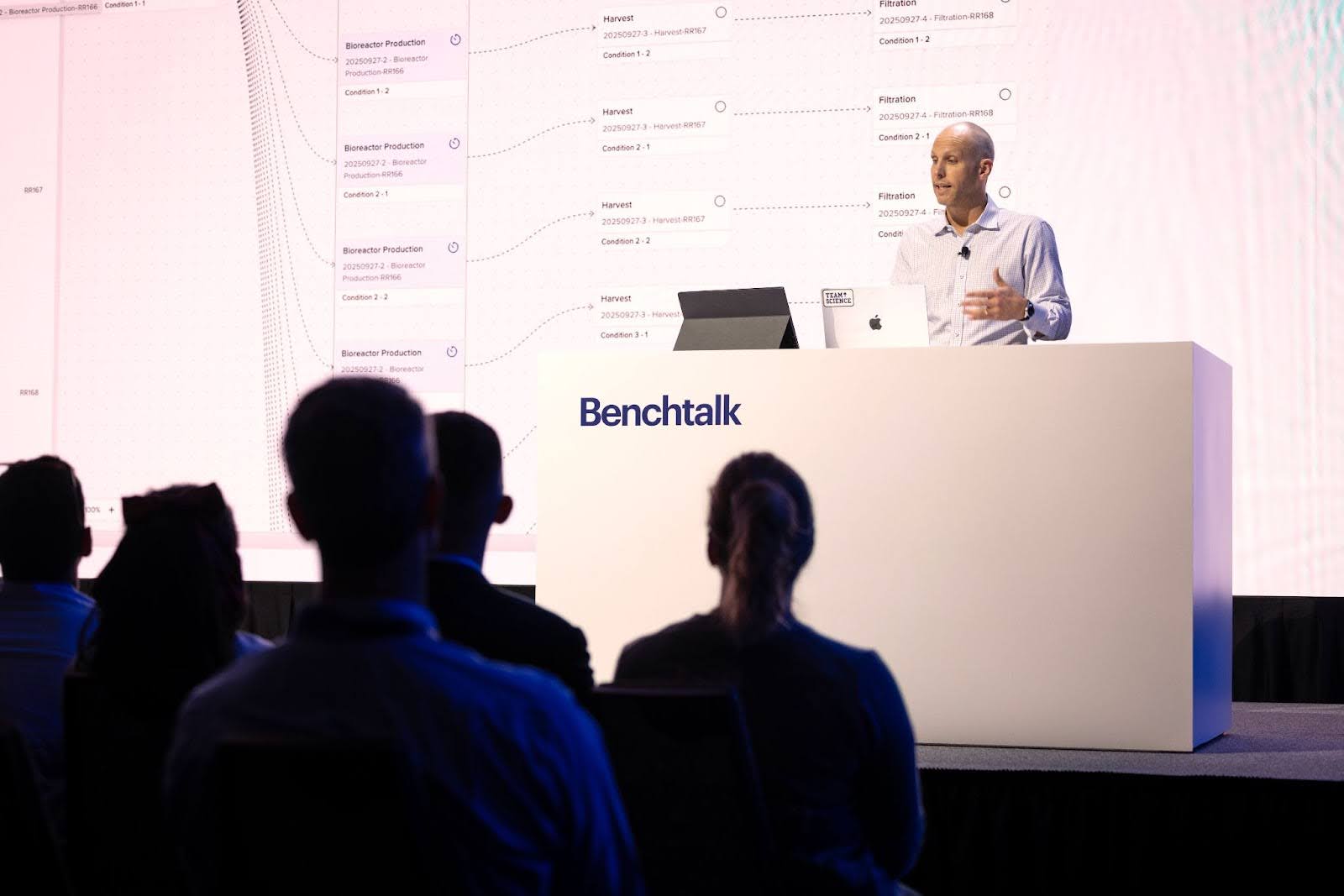
Derek Halliday, Head of Applications Product Management, previewed Benchling Development, which expands beyond the roots of Benchling Bioprocess, to serve every stage of development sciences. From process optimization and characterization to analytical development and method execution, it brings every part of development onto one unified system.
With this launch, teams can now design and adapt studies with reusable templates, trace process data to product data, and use AI to visualize and analyze results in real time. The addition of centralized process and analytical data allows scientists to see results sooner — and make confident decisions backed by context.
Development teams are already seeing the impact:
10× higher bioanalytical throughput
25% more scientist time freed up
6+ legacy systems retired
Halliday also previewed what’s next. The same lab execution system that powers these bioanalysis workflows will be extended to GMP environments like QC in 2026.
Explore all the new capabilities we released with Benchling Development.
Our biggest Benchtalk yet — and a new chapter for biotech

Benchtalk has always been shaped by our users. The scientists who test new ideas, the data leaders who turn complex data into powerful insights, and the innovators who push biotech forward. It’s where R&D leaders come to see what’s next.
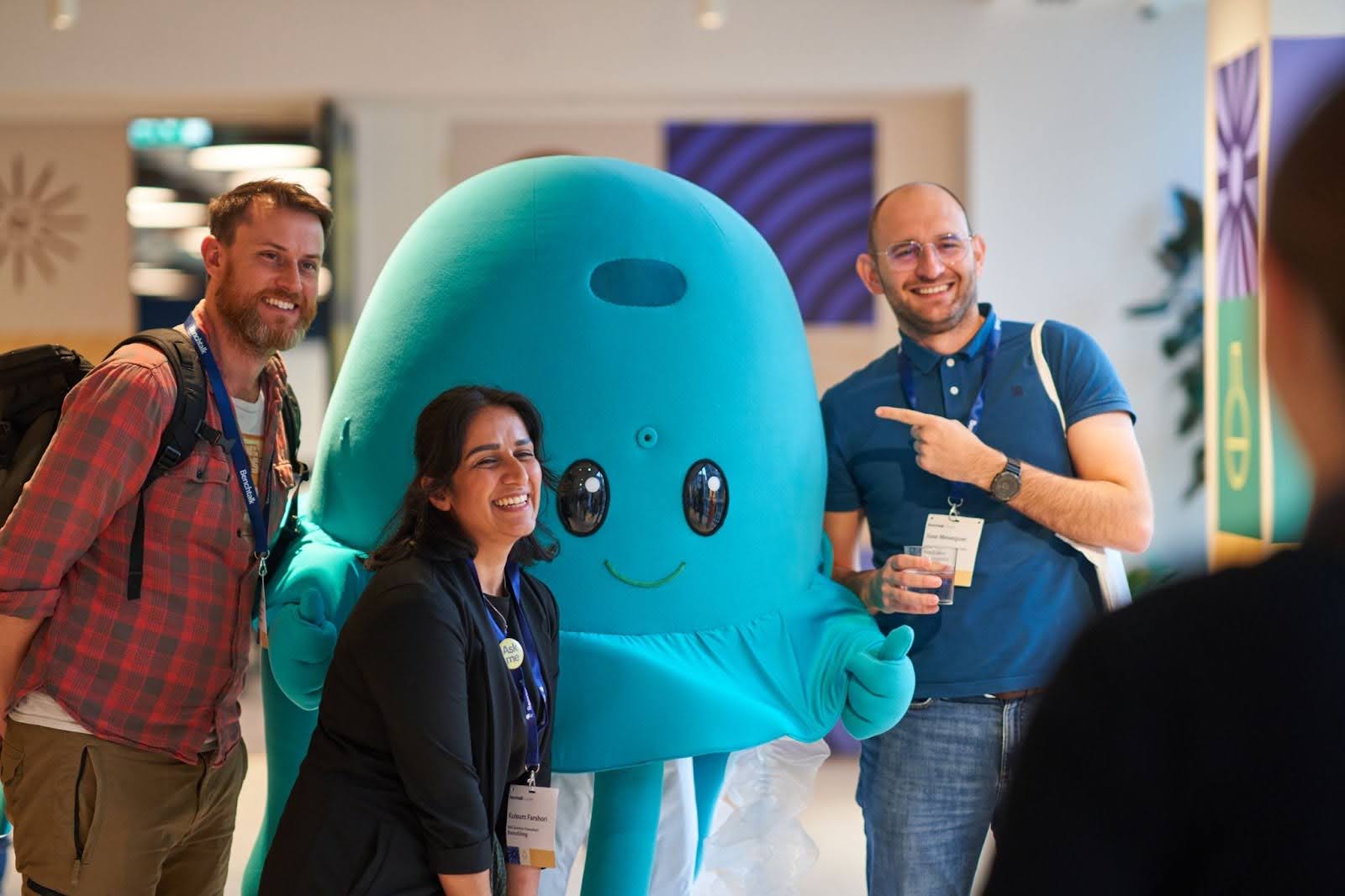
At this year’s Benchtalk conferences, that spirit was everywhere. Attendees moved between hands-on workshops, product deep dives, and live demos to discover cutting-edge tools to speed up their R&D. But we weren't the only ones sharing.
In customer-led sessions, teams showcased how Benchling helped them streamline workflows, speed up programs with automation, and optimize their labs for AI-driven R&D.
The conferences drew to a close with fireside chats with Kate Haviland, CEO of Blueprint Medicines, and Lindsay Edwards, Chief Technology Officer at Relation Therapeutics. They shared candid lessons on modernizing R&D teams, implementing digital workflows, and scaling scientific impact, offering attendees practical strategies to bring back to their own labs.
Across sessions and workshops — and in the hallway conversations between them — one thing was clear: science is accelerating and the Benchling Community is leading the way.
We’re entering a new chapter where every scientist can work in an intelligent, integrated environment that accelerates discovery and development. This is science that’s faster, smarter, and more connected. And together, we’re building it.
Benchtalk will return to Boston and London in 2026. Stay tuned for updates, and we'll see you next year!