"Show me you can predict the future." What the 4th Paris Digital Science & Innovation Day revealed about AI in R&D
Everyone in R&D is adding AI to the job they already have but nobody is redesigning the job. That tension ran through the 4th annual Paris Digital Science and Innovation Day, where more than 200 scientists, engineers, data leaders, and founders from across Europe gathered to share what's working, what isn't, and what comes next in R&D.
The day kept returning to two questions: where is AI genuinely delivering, and what it costs to get right. The throughline was clear. AI pays off when it changes how the work gets done, not when it's simply added on top.
The fastest wins in AI for R&D are the ones already sitting in your files
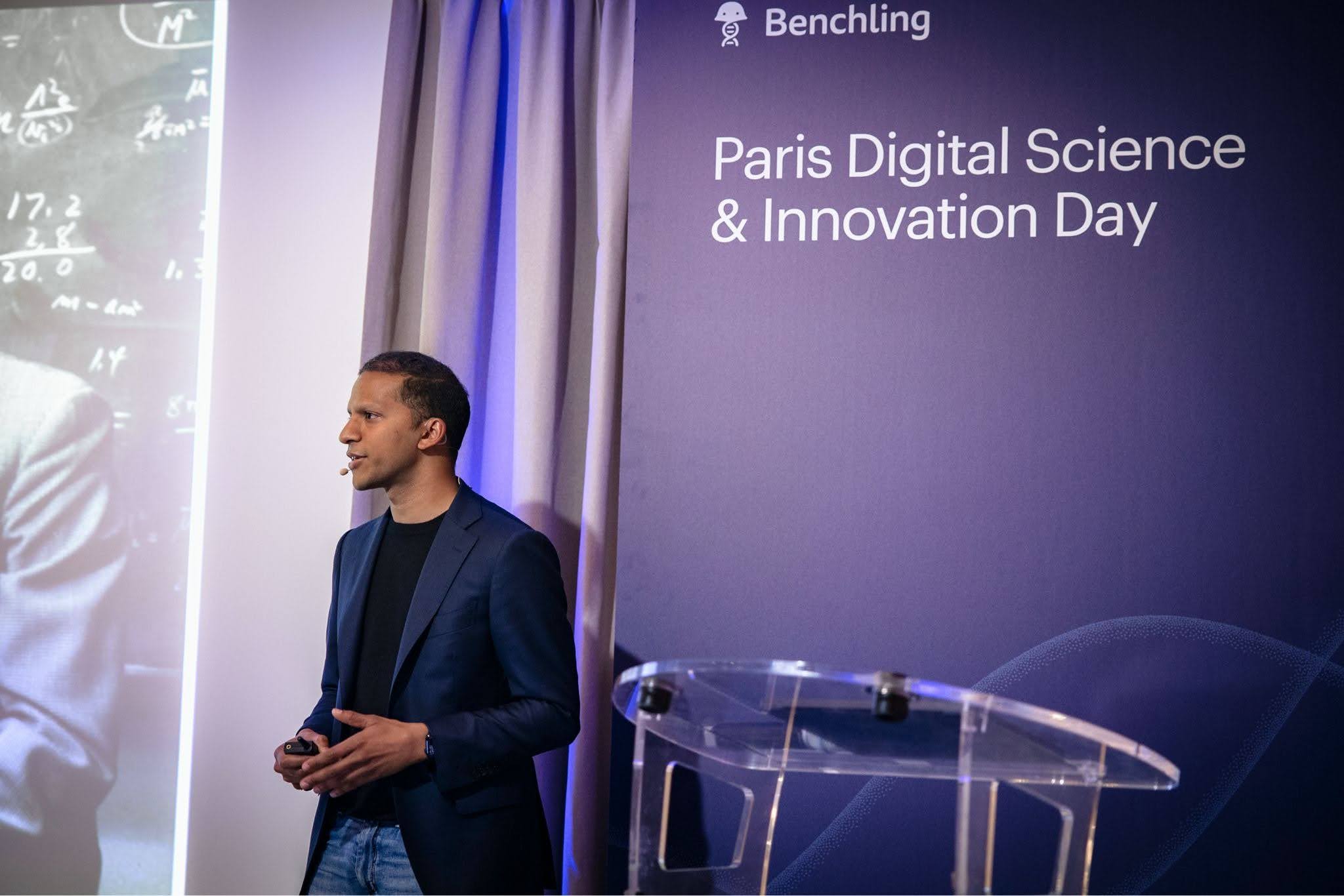
Sajith Wickramasekara, Benchling's cofounder and CEO, shared the example of how a top-20 pharma company was about to run 20 oncology animal studies. By combing through thousands of experiments inherited from an acquisition years earlier — work that no one in the building knew anything about anymore — AI found that 18 of the 20 planned studies had already been done. The company narrowed down 20 candidate mouse models to 2 and saved eight months of in vivo work. "That is AI remembering something that humans forgot," said Wickramasekara.
He also shared how Prime Medicine used Benchling AI to validate 35 product-specific assays to FDA standards on an accelerated timeline by drawing on experiments the company had been capturing in Benchling since 2022. With Benchling AI, they were able to synthesize years of experimental data, map evidence to validation requirements, design targeted follow-up studies, and generate a traceable validation package. Work that would originally have taken months was compressed to days.
Jason Boyd, who leads regulated labs market strategy at Benchling, called the result "a living validation package," one that updated automatically as new studies closed the gaps AI had identified. This moved PM359 — a prime-edited therapy for an ultra-rare immunodeficiency — one step closer to achieving a BLA. Learn more about how Prime is accelerating timelines with the Benchling AI Scientist.
The model is only as good as the data beneath it
Julien Duquesne, cofounder and CTO of Scienta, described building EVA, a foundation model for immunology and inflammation. However, Duquesne shared that the hardest part of the process isn’t the modeling but rather harmonizing transcriptomic data across species, platforms, and resolutions. "You want the data standardized enough to erase the obvious bias like experimental conditions, platform, and so on,” Duquesne said. "But you don't want to erase the biological signal you care about. Standardize too much and you lose the fine-grained signal that's actually driving your predictions." A platform that allows for standardization but also project flexibility is key.
Jacques Fieschi, CSO of MImAbs, made a related case from the antibody side. His team's Beacon platform holds thousands of antibody-producing cells and reads each one to determine whether it produces an antibody, whether that antibody binds its target, and whether it neutralizes it. "It takes a couple of weeks to clone, produce, purify, and test an antibody the traditional way," Fieschi said. "We have that data available on day one." However, balancing speed with data quality is just as imperative. MImAbs uses PipeBio, a Benchling company, to manage its antibody discovery data and is starting to layer AI-based structural modeling on top of that pipeline. This only works because the data feeding it has already been validated.
The same rule holds at the bench. Gustave Ronteix, cofounder and CTO of Orakl Oncology, described a lab-in-the-loop flywheel that cultures patient-derived lines at scale, runs systematic drug panels, and QCs the results. This sort of automation catches errors like pipetting mistakes in real time before the small fraction of bad measurements corrupts a training set. The payoff is what he called "a clinical trial in a dish," testing "30, 40, 50 patients in parallel in a matter of weeks to months, instead of waiting for years." AI efficiency begins at the bench, and the returns go to teams that generate the right data and structure it well.
Servier's Head of R&D Oncology on what earns trust
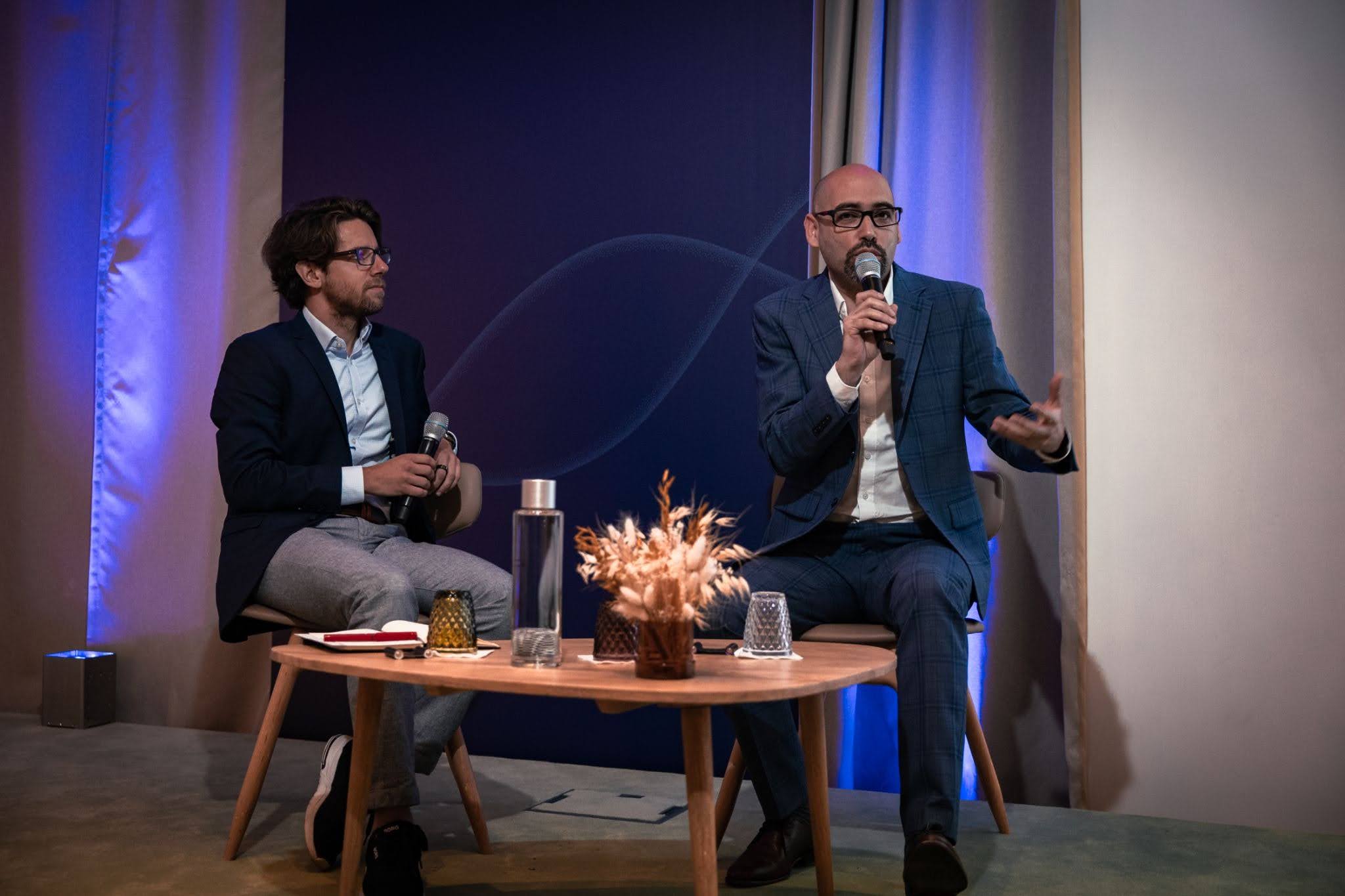
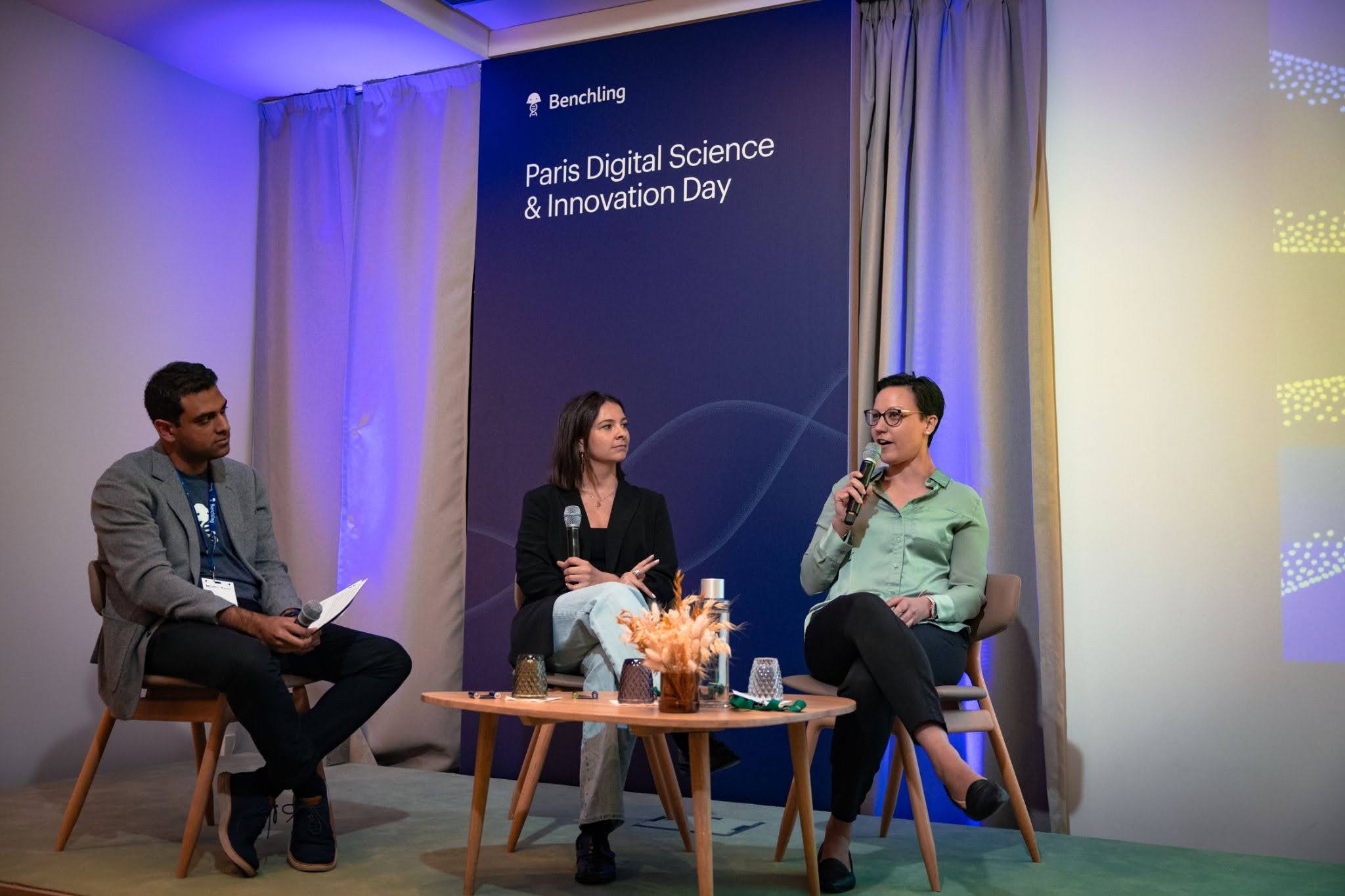
Walid Kamoun, Global Head of R&D Oncology at Servier, brought the buyer's perspective in a fireside chat with Simon Turner, Partner at Sofinnova Partners. He was blunt about how his organization evaluates AI vendors. "We don't work with benchmarks," he said. "If you tell us you're better than these 10 benchmarks, we don't care."
What earns conviction, Kamoun shared, is a demonstrated pattern of prediction. He pointed to In Silico Medicine, which built a pipeline of roughly 12 therapies in about two years, several already in the clinic. They were selling speed of execution, and they could prove it.
Another example was a company that published its prediction of an AstraZeneca phase 3 Kaplan-Meier survival curve before AstraZeneca published the trial data, and the prediction came very close. "Show me that you can predict the future," Kamoun said. Speed is provable now, but whether an AI-discovered target delivers a better therapy is something the industry will only know in 2035.
In a field where roughly 90% of medicines fail, no prediction is perfectly guaranteed. But to Kamoun, that risk is worth it. "There are people dying and we want to bring therapy to save their lives. So what is this risk that we're worried about that is worse than people dying?"
Redesigning around AI means being selective about where it goes
Two founders building AI-native companies showed what that looks like in practice. Adèle James is cofounder and CTO of Phagos, the first company authorized to market personalized phage-based veterinary drugs in the EU. Instead of testing a thousand phages against a target strain, a prediction model tells her team which 10 are worth testing. Furthermore, every prediction still gets validated in the wet lab before it's acted on. "As long as the validation is actually done on the prediction," she said, "I don't see how it could be a problem."
Dina Zielinski, principal scientist at WhiteLab Genomics, shared a similar approach. Her work focuses on payload optimization. Rather than force AI onto every step, her team has focused on where sequence-function models actually add signal, staying clear that those models are still proxies, and do not yet have the same validation that AlphaFold delivered for structural biology.
Culture and the curious few decide whether any of it sticks
Wickramasekara shared that Benchling found no correlation between years of experience, pedigree, or role and who succeeds with AI. The biggest predictor was curiosity. "You have to find those people, find what they're seeing success with, and then take that to the whole organization," he said.
At Servier, Kamoun described elevating data standardization and AI into a dedicated function inside the R&D leadership team, with its own resources and funding. He favors a power-user approach, which involves finding the curious adopters, giving them tools and time, and letting them pull the organization forward.
The pieces are sitting in your building, disconnected
Every R&D organization already has the pieces of an AI scientist — predictive models on a GPU cluster, years of experimental history in a database, and data locked in instrument files. "You have all the pieces," Wickramasekara said. "What's needed now is to connect it all together."
Benchling is built to be that connective layer for companies that want their models, data, and analysis to live in the same place. Benchling AI works across that record — reasoning over experimental history, drafting entries, and answering questions grounded in an organization's own data. Benchling Model Hub, Bioprocess, Biologics, and PipeBio each apply that same principle to a different part of the pipeline — structure prediction, process development, and antibody discovery — so the record stays connected as work moves from bench to manufacturing.
Mihir Trivedi, who leads scientific AI at Benchling described the importance of linking every prediction back to the record it came from. "At the very least, there is a trace of where this design came from. You can say here's what techniques were used in it."
When the pieces are connected, the toil of re-running known studies, hunting for buried data, and hand-assembling validation packages starts to disappear. "The biopharma companies who use AI well are gonna cure disease faster," Wickramasekara said.
Want to be part of the conversation?
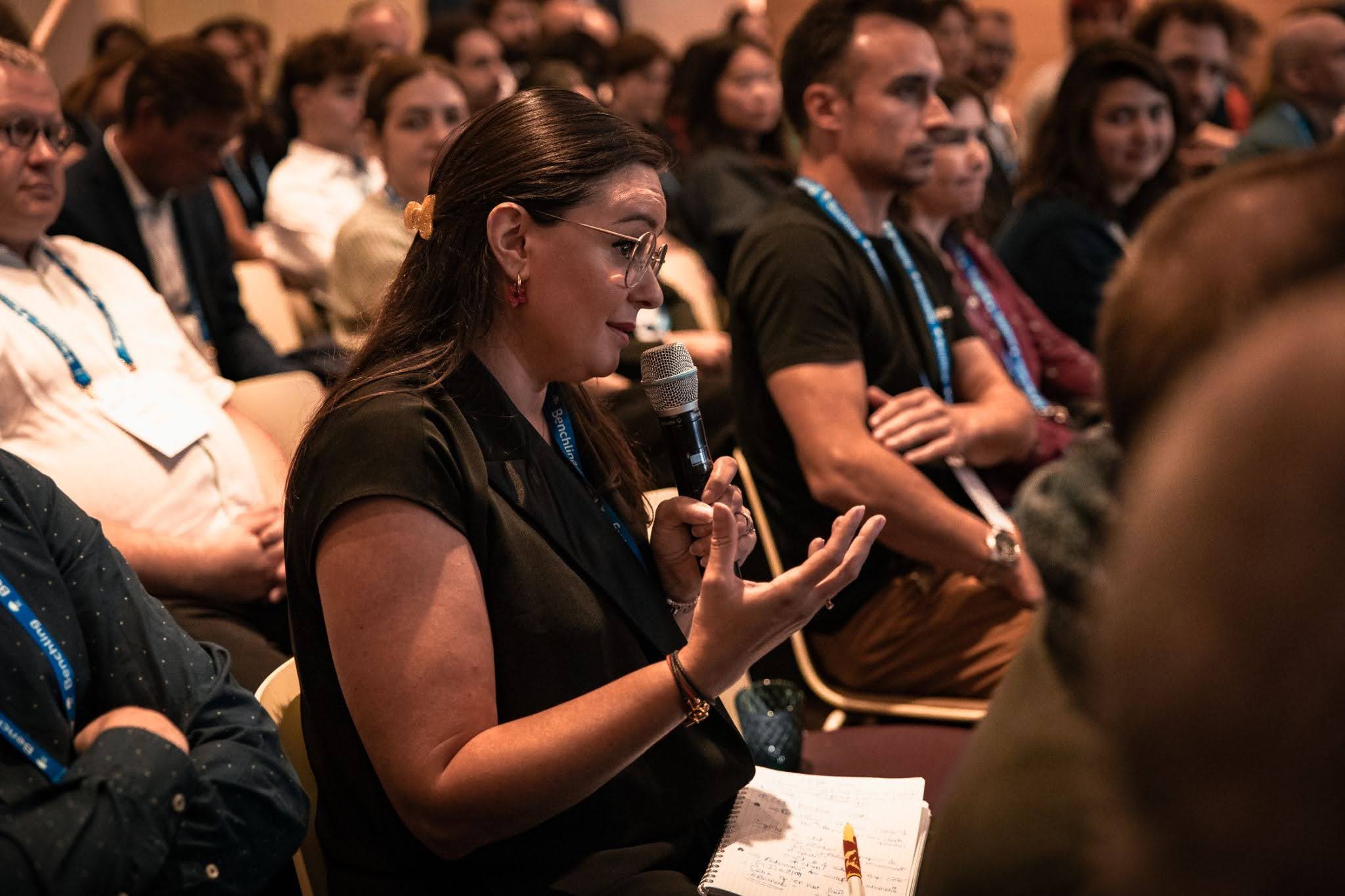
Registration is now open for Benchtalk Europe in London on Dec 3-4, 2026. Join Europe’s leading minds in R&D, science, and innovation to explore how AI is accelerating research, modernizing biopharma process development, and transforming antibody drug discovery. Register for the event now.
Request a demo to explore how R&D teams are connecting models, data, and the bench with Benchling.