
Hypothesis Generation
Every hypothesis should build on what your team already knows. Benchling AI reasons across your past experiments and published literature to surface the most relevant starting points for your next experiment.
Hypothesis generation based on your science
Built on what your team already knows
The published record captures what worked, and rarely what didn't. Benchling AI reasons across your actual experiments, failed assays, and program decisions (the private context no other model has seen) to generate hypotheses that go beyond what the literature alone could surface.
Better results through multiple models
Ask one model the same question twice and you get variations on a single point of view. Benchling AI runs multiple models from different providers in parallel, producing materially better hypotheses than any single model could generate alone.
From hypothesis to analysis in one platform
Generating a hypothesis is just the start. Benchling AI connects directly to experiment design, data import, and analysis, all in the same platform where your institutional data already lives. The hypothesis doesn't stop at an idea, it becomes the starting point for work you can actually run.
Explore AI Hypothesis Generation prompts

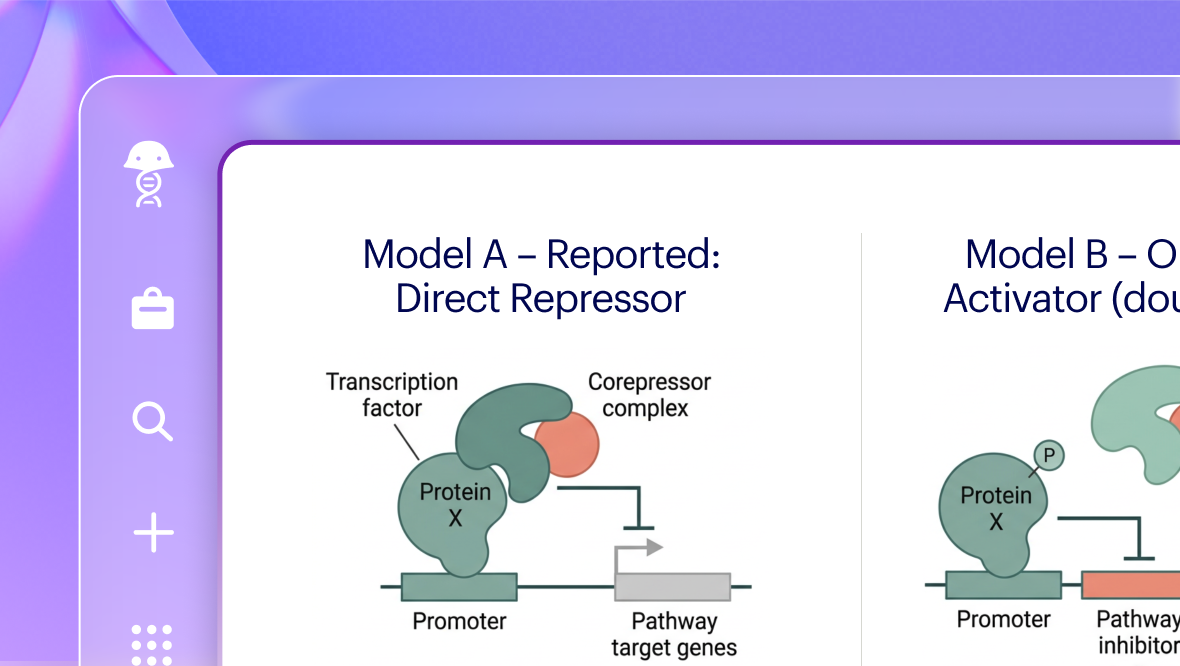
Target mechanism
Recent functional data on this target protein suggests it is acting as an activator of its pathway, contrary to the repressor role reported in the literature. Why could we be seeing this discrepancy?
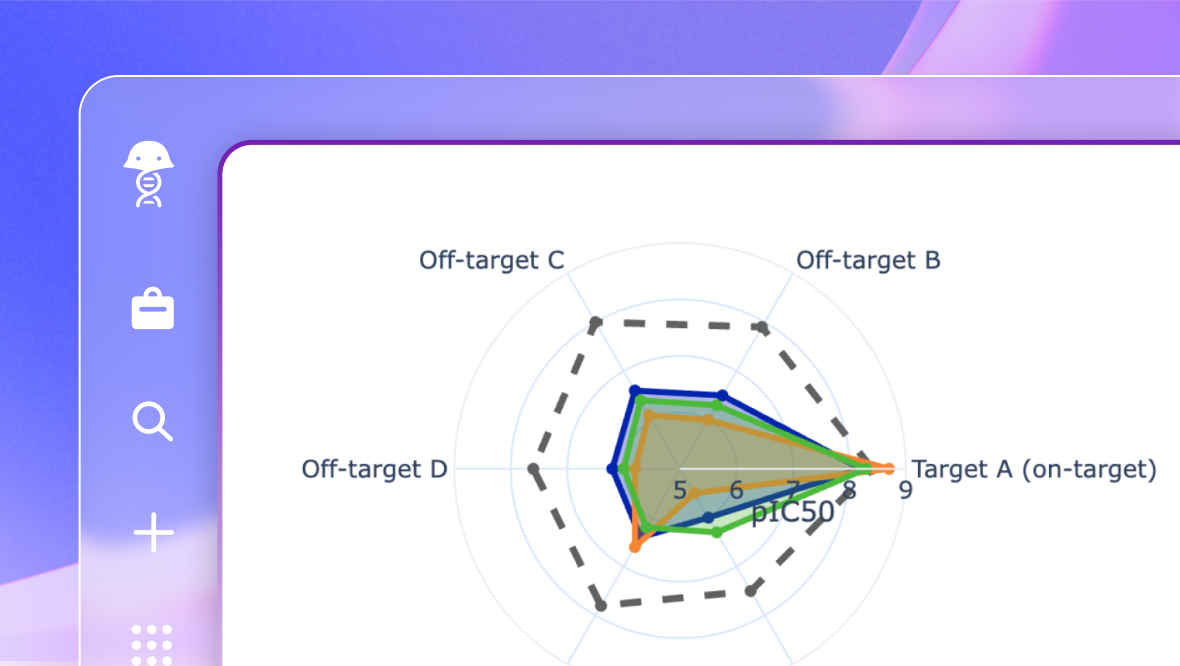
Selectivity improvement
Our lead compound looks potent but non-selective. Has anyone else made modifications to a similar scaffold to improve selectivity?
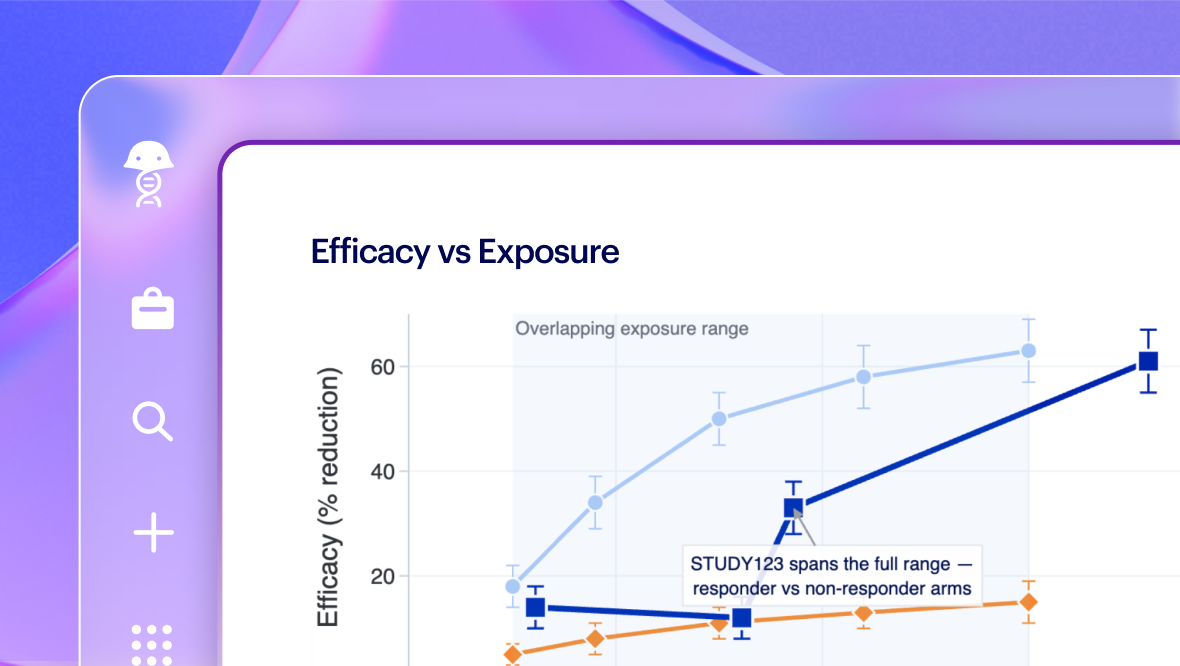
In vivo efficacy
We're seeing inconsistent efficacy signals across our in vivo studies. Based on our PK/PD data, what mechanisms could explain the variability? What does the literature say about exposure-response relationships for this target class?
Learn how teams are using AI