What the 5th annual Nordic Digital Science & Innovation Day revealed about trustworthy AI in R&D
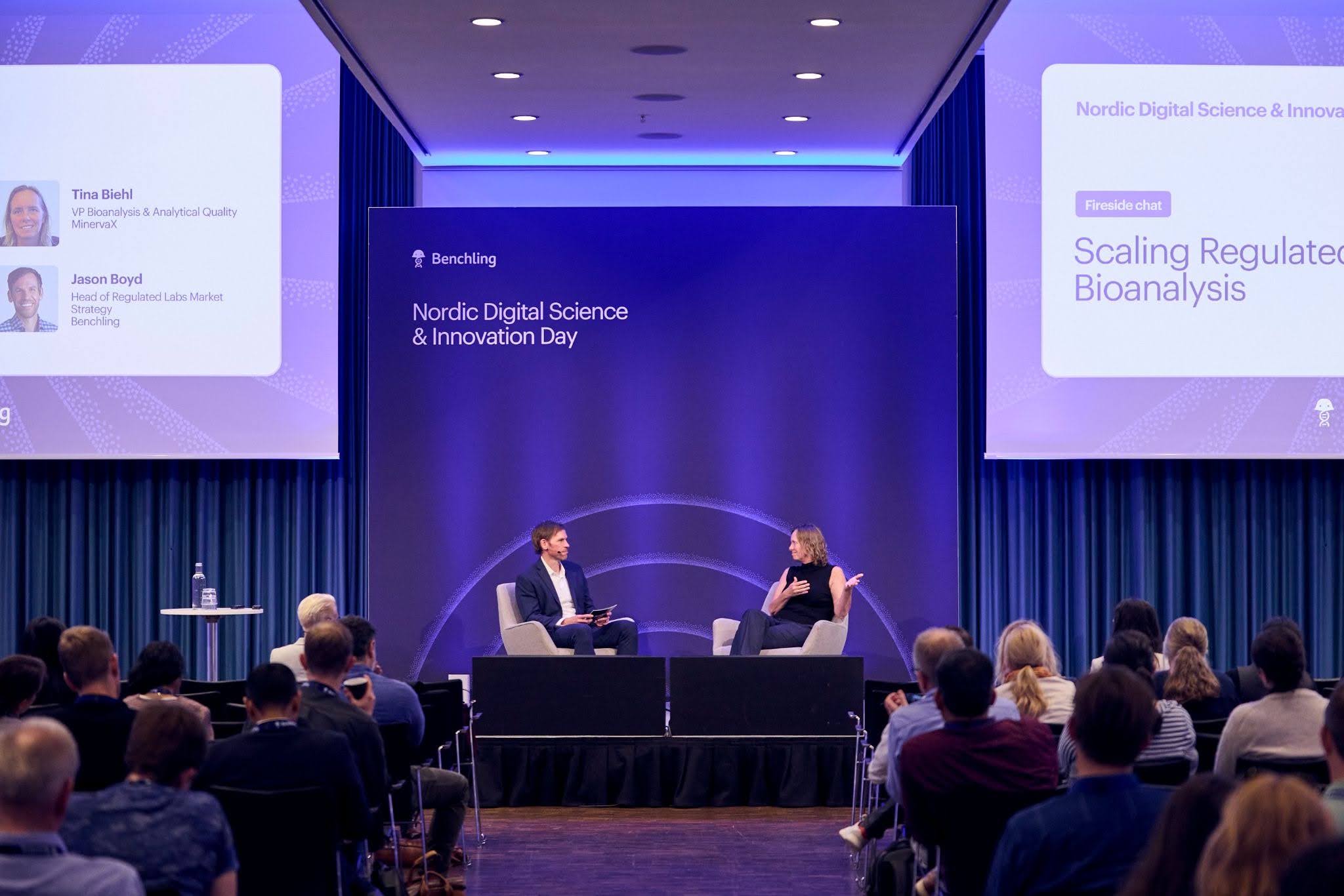
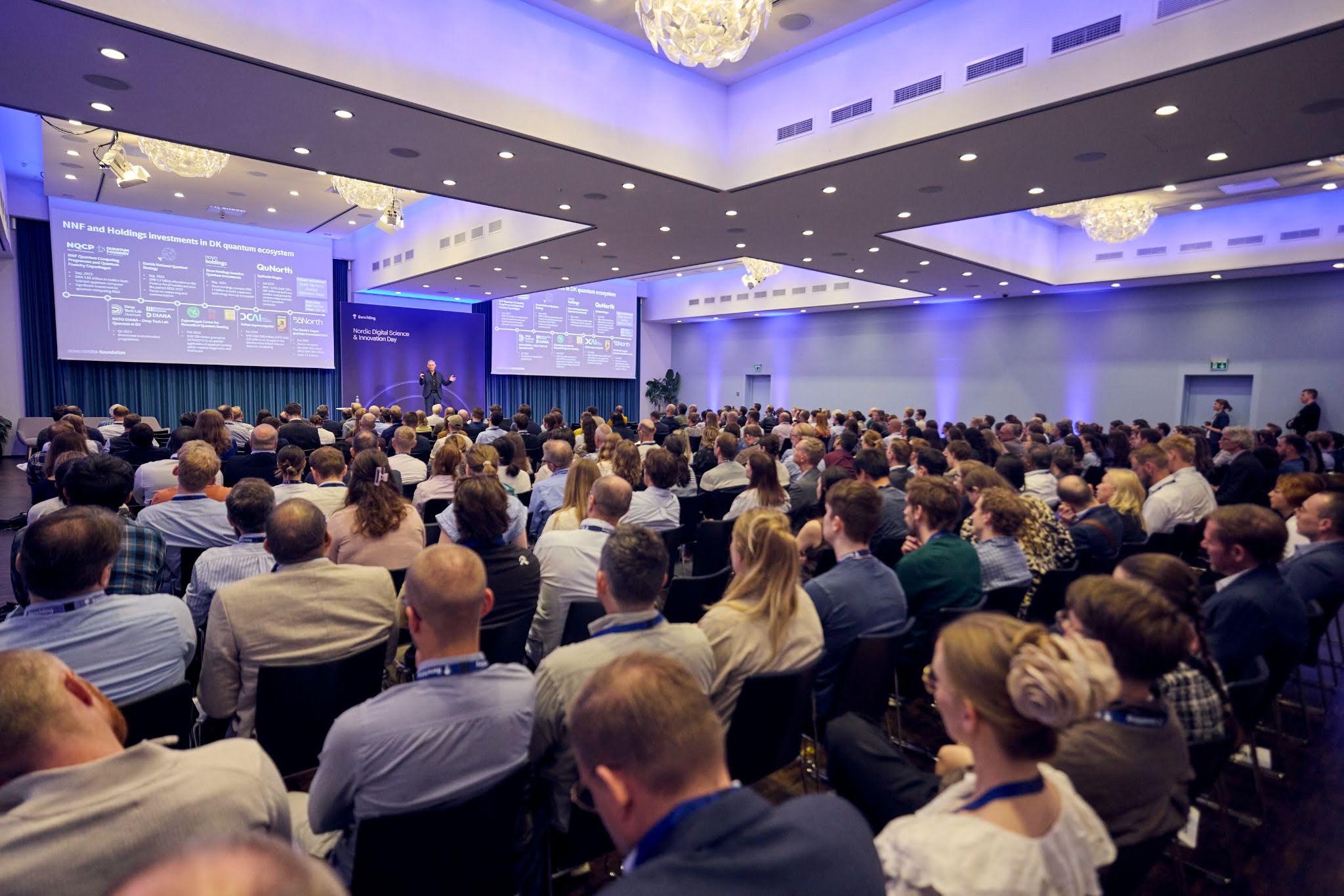
At Nordic Digital Science & Innovation Day in Copenhagen, trusting the data was a recurring theme. The fifth annual flagship gathering drew about 350 scientists, engineers, data leaders, founders, and R&D operators from across the Nordics and Europe. Throughout the keynote, case studies, and panels, the conversation kept coming back to the idea that AI only drives real progress in R&D when experimental history, wet-lab execution, and predictive work are connected in a way people can trace and defend.
Where human judgment fits into an infinite program team
A lot of what slows down R&D is overhead. This includes reconciling data, constructing report packages, hunting down experimental context — all tasks that AI can help scientists do faster within a connected data system. During his keynote, Sajith Wickramasekara, cofounder and CEO of Benchling, described an infinite program team that can design, run, learn, and propose next steps, then surface the choices that still need a human. “Judgment becomes the scientist’s job,” he said. “Everything else, the AI scientist can help with.” That loop only works when predictive models, experimental history, and wet-lab execution are sharing the same context. Until then, AI stays aspirational.
Prime Medicine made that concrete on the path toward a BLA for a prime-edited gene therapy. The team had to validate 35 product-specific assays to FDA standards on an accelerated timeline. Benchling AI synthesized four years of experimental data, mapped evidence to validation requirements, designed targeted follow-ups, and produced a traceable validation package. Months of work were consolidated into days, and the principal investigator stayed accountable for everything that moved forward in the process.
For scientists, this means fewer weeks lost reconstructing data to complete a package. For program leaders, this means evidence is structured and easier to validate.
Governance only works when it lives inside the workflow
Aref Rafat, Data and AI Governance Lead at Zifo, asked the room a simple question: "How much time does your organization spend trying to trust its own data? Not generating data, not analyzing data, not using data. Simply trusting it.”
Rafat was getting at the common lack of confidence in data that then requires extensive validation leading to delays in submissions and audits. To move efficiently, teams need to be able to trace, explain, defend, and reproduce results grounded within the experimental context. Fragmented systems make this process more tedious as a single unlogged method version or parameter change can be enough to break down trust.
“Governance cannot scale in PowerPoint,” Rafat said. “Governance must live inside the workflow.”
In many cases, the bioanalysis stack is a patchwork of separate systems, allowing context to get lost during each handoff. Jason Boyd, Head of Development at Benchling, has watched this scenario play out repeatedly where method work is stored in one system, study planning in another, and execution elsewhere, making structuring reports time-consuming and tedious.
However, Tina Biehl, Vice President of Bioanalysis and Analytical Quality at MinervaX ApS, shared a more connected approach. She described a Group B streptococcus vaccine program for pregnant women now in phase 2 clinical trials. MinervaX wanted oversight from early development through method validation and clinical sample analysis, plus visibility for leadership into study status and progress. They were able to use Benchling as a single end-to-end system, replacing manual copy-and-paste work between systems by using automated approvals and calculations. The team started with regulated bioanalysis workflows first, then began extending the structure into research.
Homegrown tools and disconnected systems break down at scale
Liam Thompson, Senior Research Scientist at AstraZeneca, encountered this firsthand. Part of a four-person team supplying plasmid constructs to Cambridge and Gothenburg sites, producing about 300 per year while demand was already climbing toward 3,000. Benchling didn’t yet have a request-management system that fit what they needed, so the team built its own instead, adding features with no real defined stopping point.
However, over time the technical debt caught up with them. Funding was tied to the original project rather than ongoing maintenance, and more knowledge was lost with each developer departure. “We should have developed the request portal and stopped there," Thompson said. "Now we have something that took years to develop and a lot of money, and we're not using it fully because it doesn't reflect our needs." The team has since folded plates, inventory, and AI-assisted clone selection back into Benchling, replacing what used to be error-prone manual work in Excel.
A different kind of gap showed up at Enginzyme, between computational biology and experimental insights within their data model. Malin Lüking, Lead Researcher in Computational Biology, closed that gap over the past year with Benchling. Automated wild-type panel workflows now save alignments, annotations, and structures into Benchling, turning what used to be one-way into a bidirectional exchange.
Ludovic Tranholm Otterbein, SVP of Digital, Data and Technology at Zealand Pharma, framed the cost of AI and internal tools as an iceberg — above the surface sit the visible costs, data protection and AI token spend. Below the surface is everything else, including chasing use cases instead of outcomes, plus the costs that never make it into an invoice: adoption, training, change management, and the added work of bringing AI into a regulated environment.
The teams getting the most out of AI aren't necessarily the ones spending the most on tokens. It's critical to build change management and training into AI budgets from the start.
Antibody teams still don’t agree on what to call the same molecule
Antibody formats have multiplied faster than many registries can describe them. Vaibhav Bhardwaj, Solution Consultant - R&D at Benchling, described a common nomenclature problem where the same antibody molecule can carry several correct names. However, tools like Benchling Biologics emphasize visual registration, structured metadata, and API export. The shared structure lets discovery and later development speak about the same entity without a translation tax.
That same breakdown in communication shows up in cell therapy. Shanti Chari, Chief Digital Officer at Novo Nordisk Foundation Cellerator, described building a digital thread while standing up process development toward GMP. Data inconsistencies — variability, inconsistent units, unstructured text, missing audit trails, and disconnected materials — all widen the reproducibility gap needed to get to GMP.
"A digital thread as a concept does not work unless you have a unified data platform supporting ELN, LIMS, and EBR to reduce tech transfer variability, time, and costs," said Chari. “Interfaces across these systems often fail because they are too complex. A unified platform is key — which is why we plan to use Benchling — making the digital thread realistic and scalable as work moves into GMP."
Want to be part of the conversation?
The Nordic region is leading on ambition and appetite for AI in R&D. The teams that pull ahead will be the ones that turn fragmented experimental history into something connected and traceable, keeping judgment human even as things move faster.
Registration is now open for Benchtalk Europe in London on December 3–4, 2026. Join Europe’s leading minds in R&D, science, and innovation to explore how AI is accelerating research, modernizing biopharma process development, and transforming antibody drug discovery. Register for the event.
Request a demo to explore how R&D teams are connecting models, data, and the bench with Benchling.