How good is AI at molecular biology?
We're releasing BenchBench-Cloning, a benchmark that tests whether AI models can design complex molecular cloning experiments. The top model, GPT-6 Astra, solves only 30.6% of tasks. Read the paper here, written in collaboration with the team at DNAForge.
We’re seeing more scientists turn to LLMs for help designing complex experiments. Models are already capable of individual steps like analyzing DNA sequences. But our work shows that designing an entire experiment requires a level of end-to-end biological reasoning that frontier models are just starting to develop.
BenchBench-Cloning
Molecular cloning is a foundational technique in biology. Scientists need to identify the right starting materials, design sequences, and plan a series of reactions that produce the intended result.
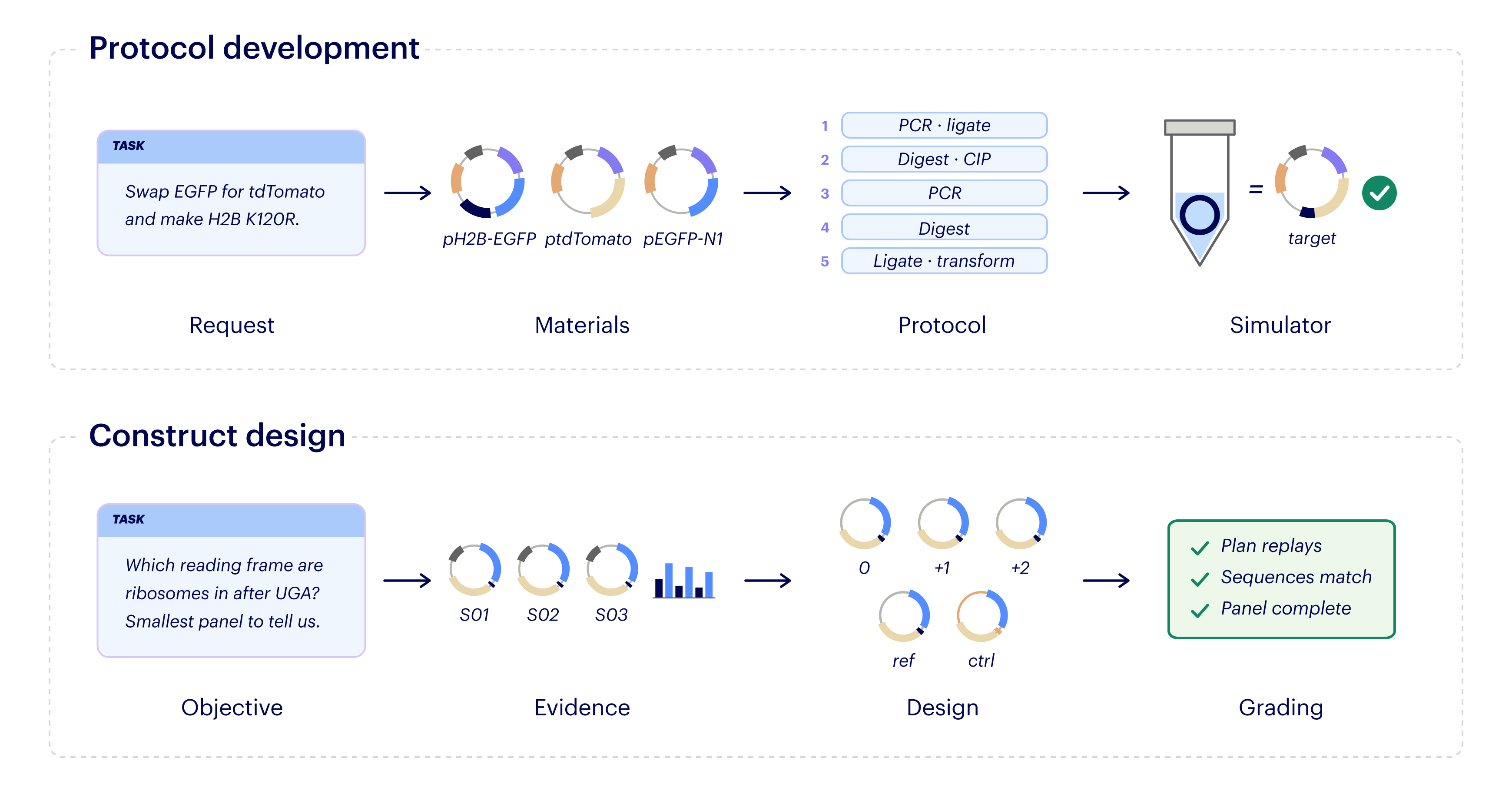
We worked with scientific experts to build 65 cloning tasks drawn from real experiments. The tasks have two types: protocol development (designing a complete construction protocol) and construct design (determining which constructs to make to accomplish an objective).
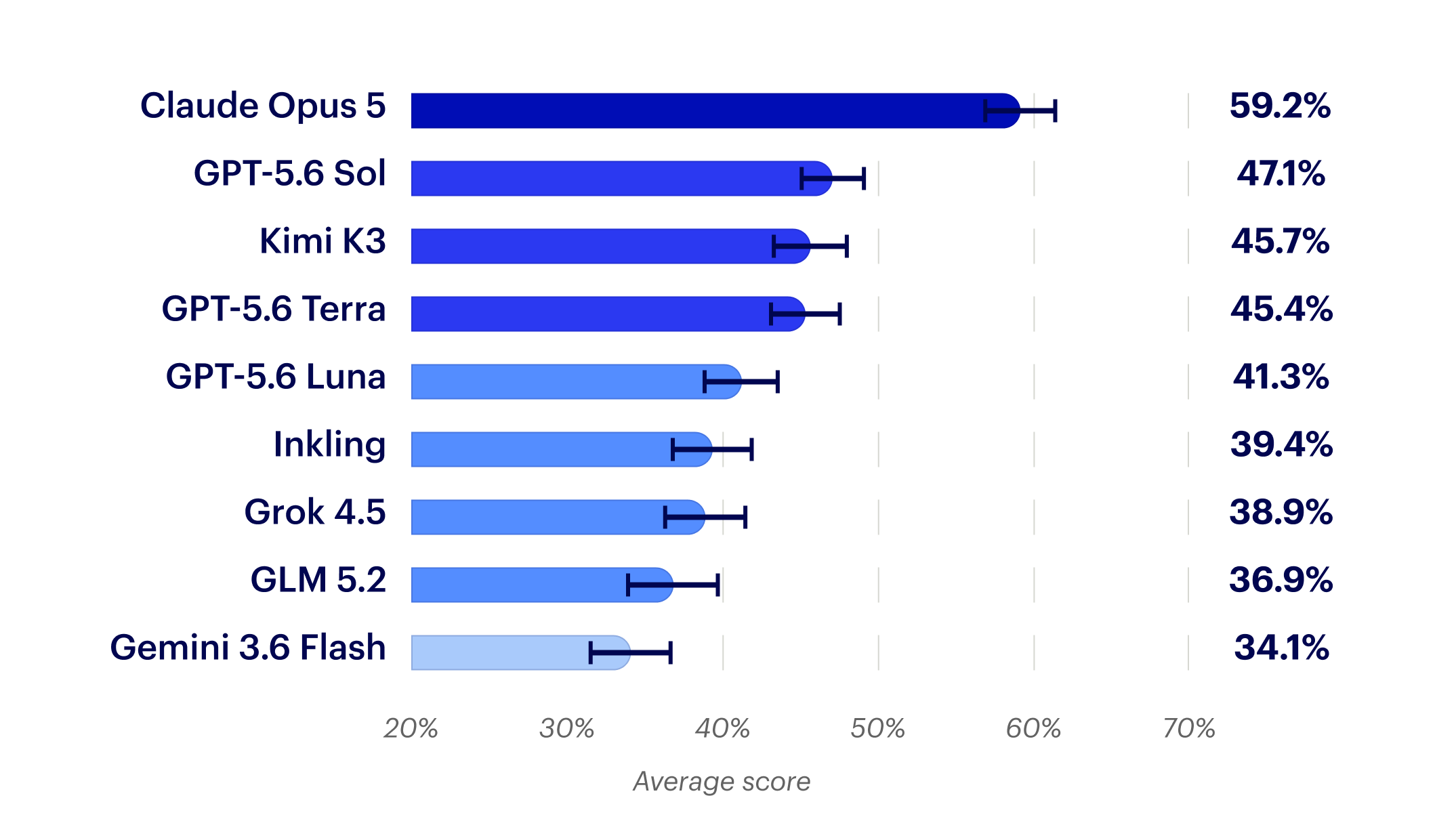
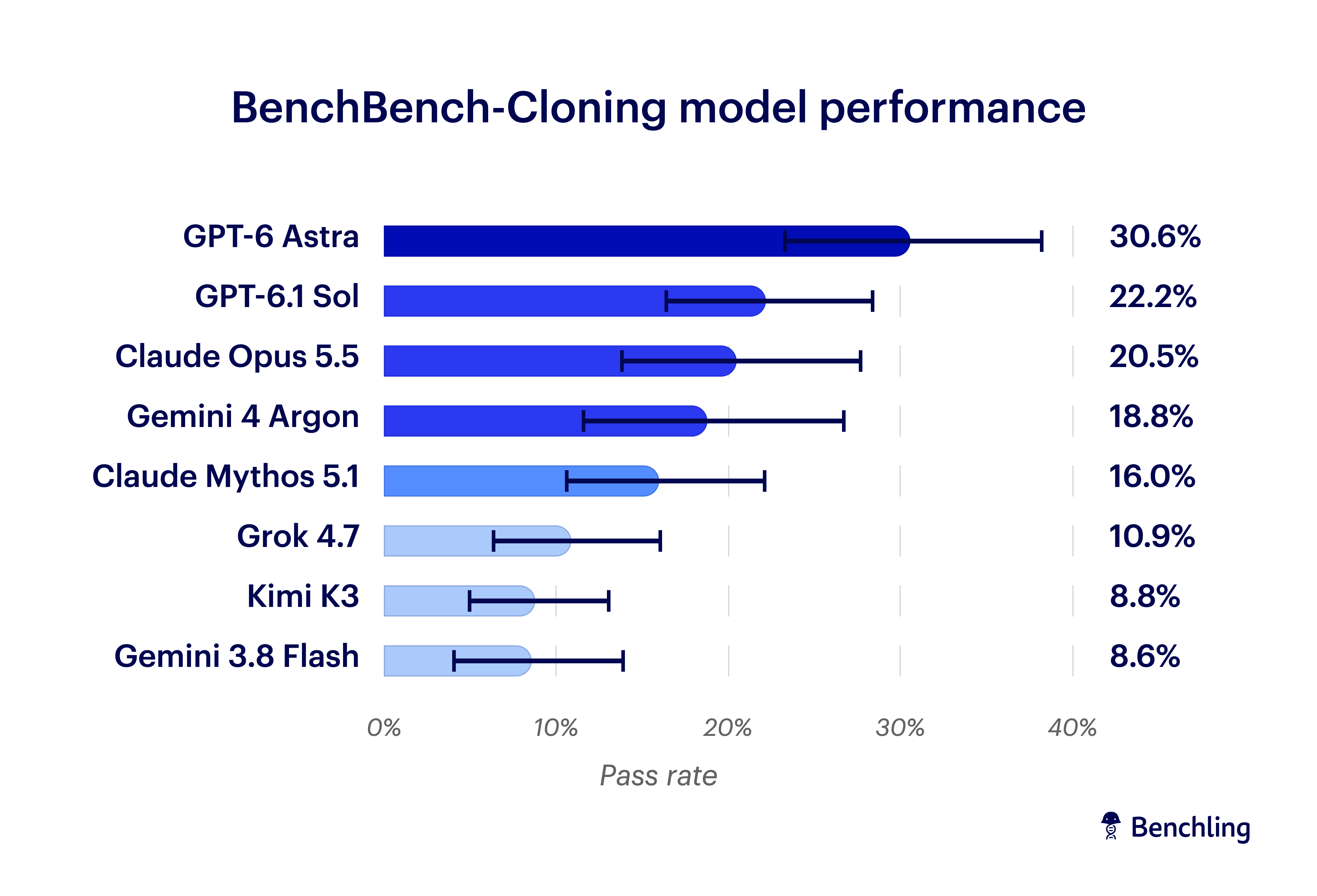
GPT-6 Astra led with a score of 30.6%, followed by GPT-6.1 Sol at 22.2% and Claude Opus 5.5 at 20.5%. Kimi K3 scored 8.8%, highlighting the gap between frontier and open-weight models at this task.
Models frequently make the right individual decisions but struggle to put them together. They design some of the right DNA constructs but forget a critical experimental control. They design primers that target the correct sequence but can't work together in a reaction. They plan the right reactions but fail to isolate the desired product at the end.
These tasks require long, multi-step reasoning. Models have become remarkably good at this in domains like coding, but our results show how much room remains in biology. Repeated attempts improve performance substantially: the top model can solve 72% of protocol-development tasks within ten attempts, compared with 27% on a single attempt. The capability is emerging, but the reliability isn't there yet.
What’s next
Most benchmarks for scientific AI still focus on obscure knowledge and reasoning questions. We're building BenchBench to test how well AI models perform on the real problems scientists face every day.
BenchBench-Cloning follows our earlier release of BenchBench-Protocol, which tests how well models can troubleshoot and optimize wet lab protocols. We're expanding the suite to cover structuring messy scientific data, writing scientific reports, and evaluating biosecurity risks.
Our goal is to help scientists choose the best models for their work, and give AI developers concrete problems to improve on. We'll be publishing more benchmarks and results in the coming weeks.