What a difference a year makes: The evolution of the AI conversation

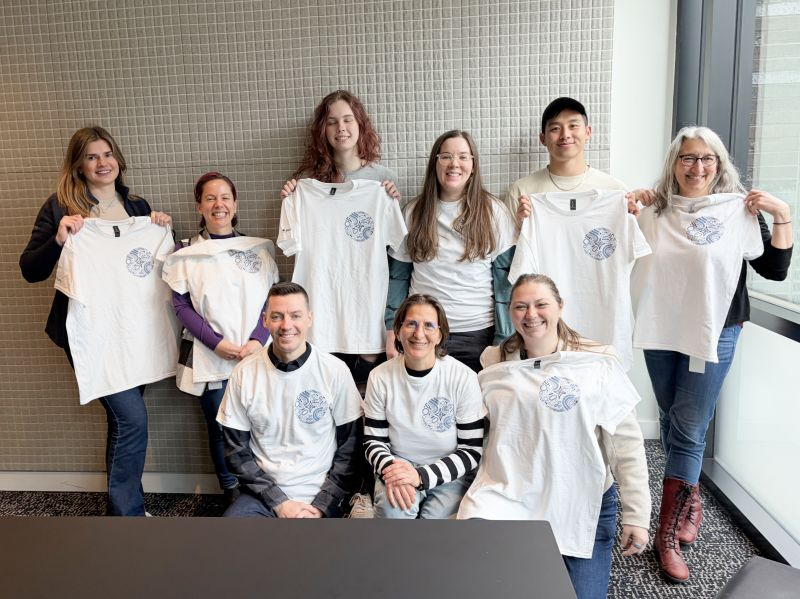
A few weeks ago I met with the Seattle User Group to talk about all the new developments in Benchling AI. With the sheer volume of releases over the past year, it felt like an important and necessary conversation. This was a chance to debrief, ask questions, and hear how different Benchling users and their teams were actually using these tools. We had a really great discussion, and I came away struck by how much progress this group had made since the last time we met.
A year ago, I was also in Seattle with this same group, talking about the transition from AI readiness to adoption. We spoke a lot about blockers, hesitations, and skepticism. At that point, Benchling had a limited suite of AI features in preview. Now we have a full suite of tools generally available to users at every stage of their science, and folks are implementing them into their workflows.
Where we were a year ago: Stuck on getting started, not adoption
Last April I asked the group: "How are the scientists you're working with responding to new technologies like AI and ML? Is there skepticism? Enthusiasm?" and "How do you make plans and set goals for your company around evaluating, implementing, and adopting new tools?"
People shared that they didn't know where to start with getting approvals for AI tools in Benchling. There weren't established protocols or clear roles around AI yet. The discussions we had were about change management, data hygiene as a prerequisite, and how to get scientists to try something new. We were stuck on readiness instead of adoption.
Where we are now: Opinions and action with AI
This year, people arrived with opinions, not just questions. Nearly everyone in the room shared about their favorite Benchling AI tools and how often they're using them. The Compose Agent and Ask Agent, especially, are daily drivers for some teams. Jen Running Deer, one of our user group leaders and Associate Director of R&D Informatics at Outpace Bio, spoke about using the Deep Research Agent to show leadership what was possible with Benchling AI. It worked — their executives were impressed with the results it could surface. Hearing all these stories made me do a double take back to the conversations the year prior. Our other user group leader, Adam Murray, Laboratory Information Specialist at Lundbeck, shared a similar arc. Getting IT and legal approval was a long process as they were still developing evaluation criteria for AI tools. However, once that hurdle was cleared, they committed fully: onsite training, access rolled out to everyone at once, and a prompt library from their Customer Success Manager that gave scientists a concrete starting point. Now management actively encourages AI use wherever possible.
What's still hard and why that's a good sign
The friction hasn't disappeared, but rather evolved. The blockers aren't "should we use AI" anymore. Instead, areas where adoption lags are more easily identifiable and solvable.
Data readiness came up in a new way this year. Jen shared that their flow cytometry data still isn't structured in Benchling due to the instrument-specific data format. Instead, it lives outside the system and only gets briefly referenced in entries. That gap matters when you're trying to use AI to reason across your data. We talked through how AI Connectors can bring that external data into Benchling AI's context, so the agents can still draw on the full picture. Getting the data in the right shape is still real work, but now teams are able to problem solve using the full spectrum of tools at their disposal.
Part of the AI journey is figuring out which tools are the best for the job and why. We talked about using general LLMs to craft better prompts for Deep Research. I recommend this for getting the most out of your prompts on the first try, reducing the need for constant refinement. Scientists can then run prompts in Benchling, which has all the experimental context.
One attendee called our SQL Writer "brilliant" after using it to build dashboards they never could have created manually. She had been using Gemini, but following our discussion, tried it out and was impressed with how well it worked. Using a specialized tool with built-in context made all the difference — instead of hunting down identifiers in the schema browser and swapping out placeholders by hand, Benchling AI pulls directly from your schema and automatically surfaces the right ones based on what you're working on.
How much Benchling AI has grown in a year
A year ago, most of what we discussed at this meeting didn't exist yet. Ask, Deep Research, Compose, Data Entry Agent, SQL Writer, and Model Hub weren’t available. Now, the group is able to discuss and request improvements to these tools after using them extensively.
Looking ahead at the AI roadmap., two ideas resonated strongly: the idea of a unified AI interface that routes your question to the right tool, and secondly, a tool that generates slides directly from Benchling data, instead of collating the data from multiple entries.
Security is one of my favorite topics to address head-on. It is so much better to talk through any concerns so feel confident and comfortable with using these features. Benchling AI is set up so your data and queries stay securely in your tenant while still using the power of our AI partners. During the meeting, we read through some of our security help documents and discussed how to loop in Benchling’s legal and security teams, if needed, to secure approval for these tools.
The difference a year makes
A year ago, this group was asking for permission from IT, legal, skeptical scientists, and themselves. This year, they're pushing on limitations and thinking about what comes next.
If you're earlier in your AI journey, the Benchling Community and the AI Resource Hub are good places to start — it's where teams share what's working, what isn't, and how they got there. If you're further along and have something to add, we want to hear from you too! We're all figuring this out together and the more teams that share what they're learning, the faster everyone moves.