Vibe coding enters the lab
Today we are launching vibe coding in Benchling. Scientists can now build and share applications across their R&D organization.
Andrej Karpathy, an AI researcher, coined vibe coding in 2025 to describe building software by prompting in plain language. Now anyone with an idea can use AI to build in minutes what used to take engineers weeks.
Scientific vibe coding is exciting because of the speed and flexibility it unlocks. There is always a new dataset or project that needs a tool that doesn’t exist yet: a candidate dashboard for exploring the latest screening data, a project tracker for a newly launched study. The pace of scientific work used to be constrained by how quickly someone could build a heroic Excel macro or convince IT to customize a piece of software. Now it’s just a prompt away.
But to accelerate science, reproducibility matters. Candidate molecules need to be evaluated consistently. Visualizations need to be comparable across studies. An LLM reinventing these from scratch will slow teams down. The challenge is turning vibe coded apps into capabilities the rest of the organization can trust, reuse, and extend.
Vibe coding 101
Open up Benchling AI and describe what you want, for example, a candidate dashboard that brings together efficacy, PK, safety, and manufacturability data. Within minutes, the application is created directly in Benchling, using your structured data, and shareable with your entire team.
That single prompt generates an interactive candidate dashboard that aggregates all experimental data. From there, a project lead can tweak the layout, drill-downs, or comparison views with a simple follow-up.
Vibe coding is for R&D leaders too. It can help them understand what’s happening across their organization without having to ask.
An executive can build a live program tracker that combines study timelines, milestones, and the latest experimental results into a single view. It’s much more than a static PowerPoint deck. They can click into the underlying experiments and ask follow-up questions without the barrage of email threads that usually follow. Lose no context, and build in a fraction of the time.
Sharing and extending applications
Scientists don’t reinvent assays every time they run them. They get standardized, shared, and adapted by many teams over time. The same should be true for the applications they build.
Sharing a vibe-coded application in Benchling is as easy as sending a link. There’s nothing to deploy or host, and you can use the same permissions and security controls you’ve already set up.
But scientists should also be able to build on what others create. Easy-to-build templates in Benchling have long made scientific work repeatable but adaptable, for everything from notebook entries to molecule formats to analysis pipelines. Skills are templates for agents: preserving what should stay consistent while letting scientists change the rest.
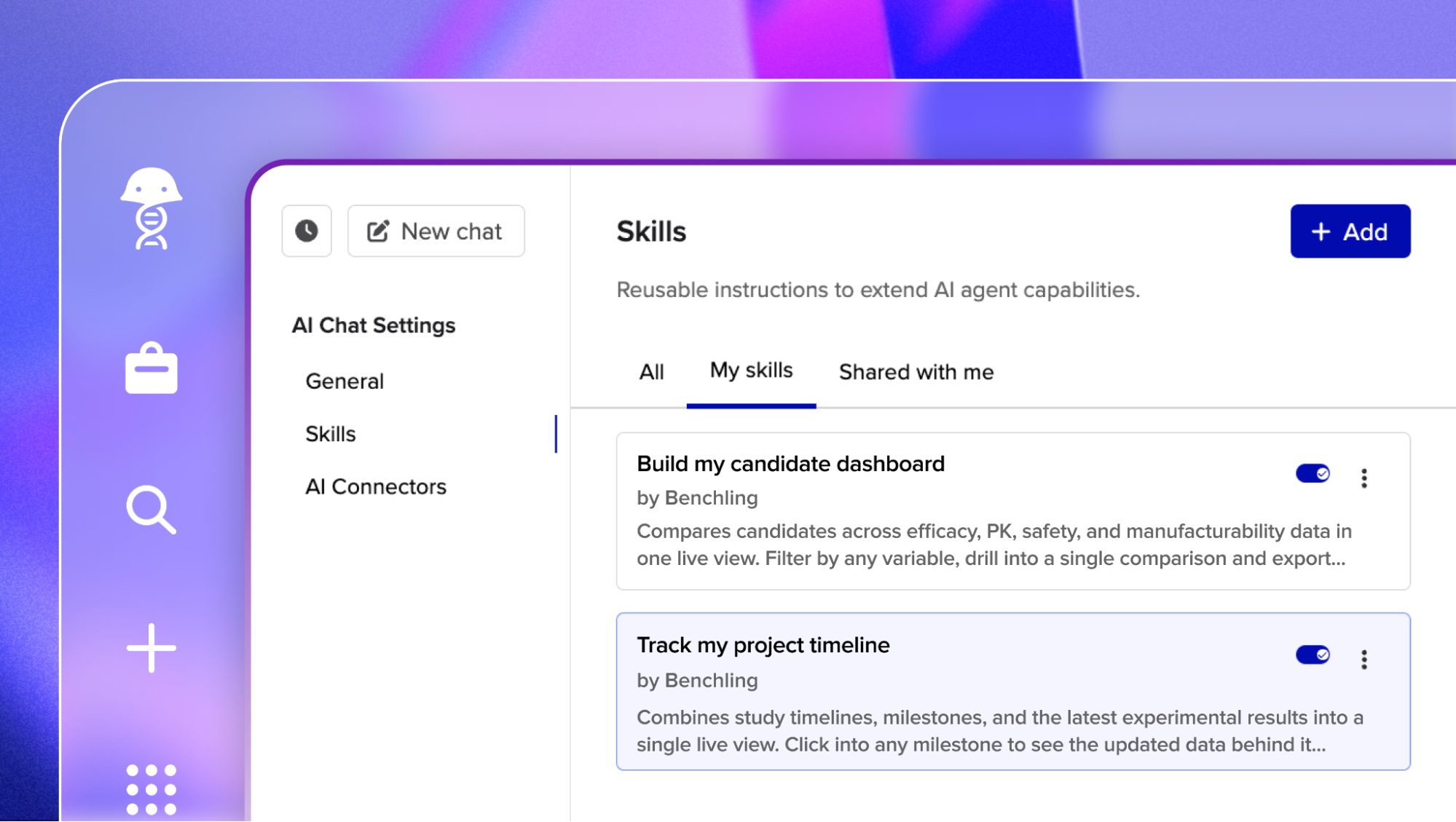
Suppose you like the candidate dashboard the agent created earlier. Just ask Benchling AI to turn it into a Skill. The agent packages together the code that generated it and the knowledge about where to find the underlying data. The next time someone needs a candidate review, the agent reuses this Skill and tailors it to a new project instead of reinventing from scratch.
The most valuable AI innovations almost always start with one power user. Skills help everyone else benefit.
What’s next
Today, vibe coding in Benchling lets scientists consume data by visualizing and interacting with it. Next, it'll become a way to automate work by creating data and taking actions as well.
Imagine a scientist processing hundreds of samples at the bench. They ask Benchling AI to build an interface that lets them quickly scan a barcode, record a decision, and move to the next. Benchling AI generates a purpose-built UI, and also connects it with the underlying data model so the results get stored in the right place.
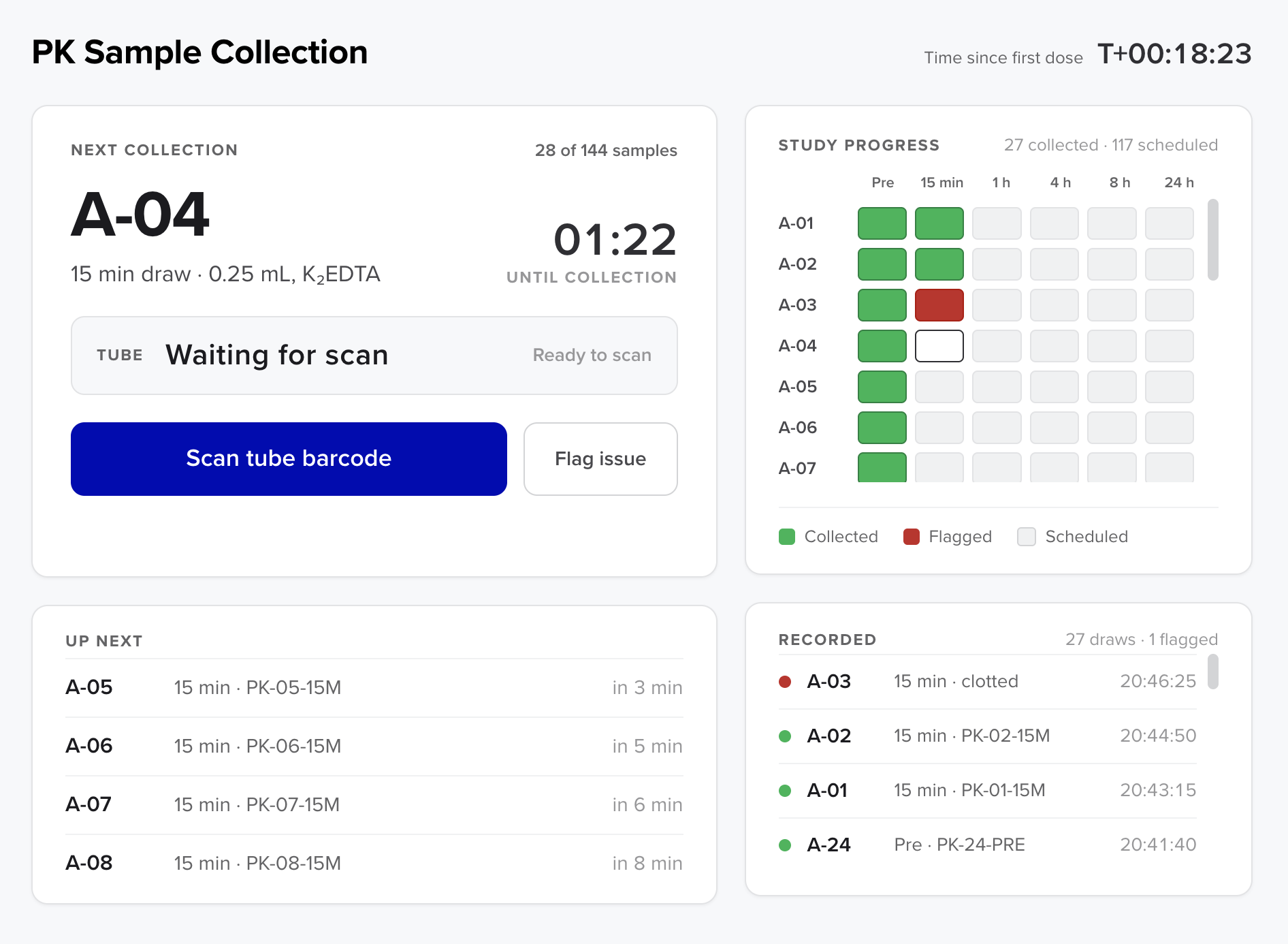
This will open up so many more possibilities: assembling molecules through interfaces tailored to a company’s unique modality, orchestrating complex studies and sample logistics from a single workspace.
Our most technically adept customers currently build applications like these on top of Benchling’s API. Soon, any scientist will be able to create them in minutes instead of months.
Try it now
Vibe coding in Benchling AI is available to everyone today. Simply open up the chat and describe what you want. We can’t wait to see what you build.