Women in Sales at Benchling
The researchers and scientists building the next generation of therapies need the best tools to do it. Getting those tools into the right hands is what the Benchling sales team does. That kind of work demands people who are sharp, driven, and deeply motivated by something bigger than a number on a whiteboard.
The six women you're about to meet are exactly that. They come from different backgrounds, carry different titles, and are at different points in their careers, but they share a belief that the work they do here matters. This is what it looks like to build a career in tech sales at Benchling.
Cristina Sánchez Conde - SMB Account Executive
What does your role look like day-to-day, and what part of the sales process do you own end-to-end?
I'm responsible for the relationship with small and medium businesses at Benchling. A lot of my work involves connecting with growing startups and showing them how we've supported 200+ companies like them to digitalize their R&D operations. It's a process that requires genuinely understanding what they're looking for and why.
Can you share a moment where you felt truly supported here?
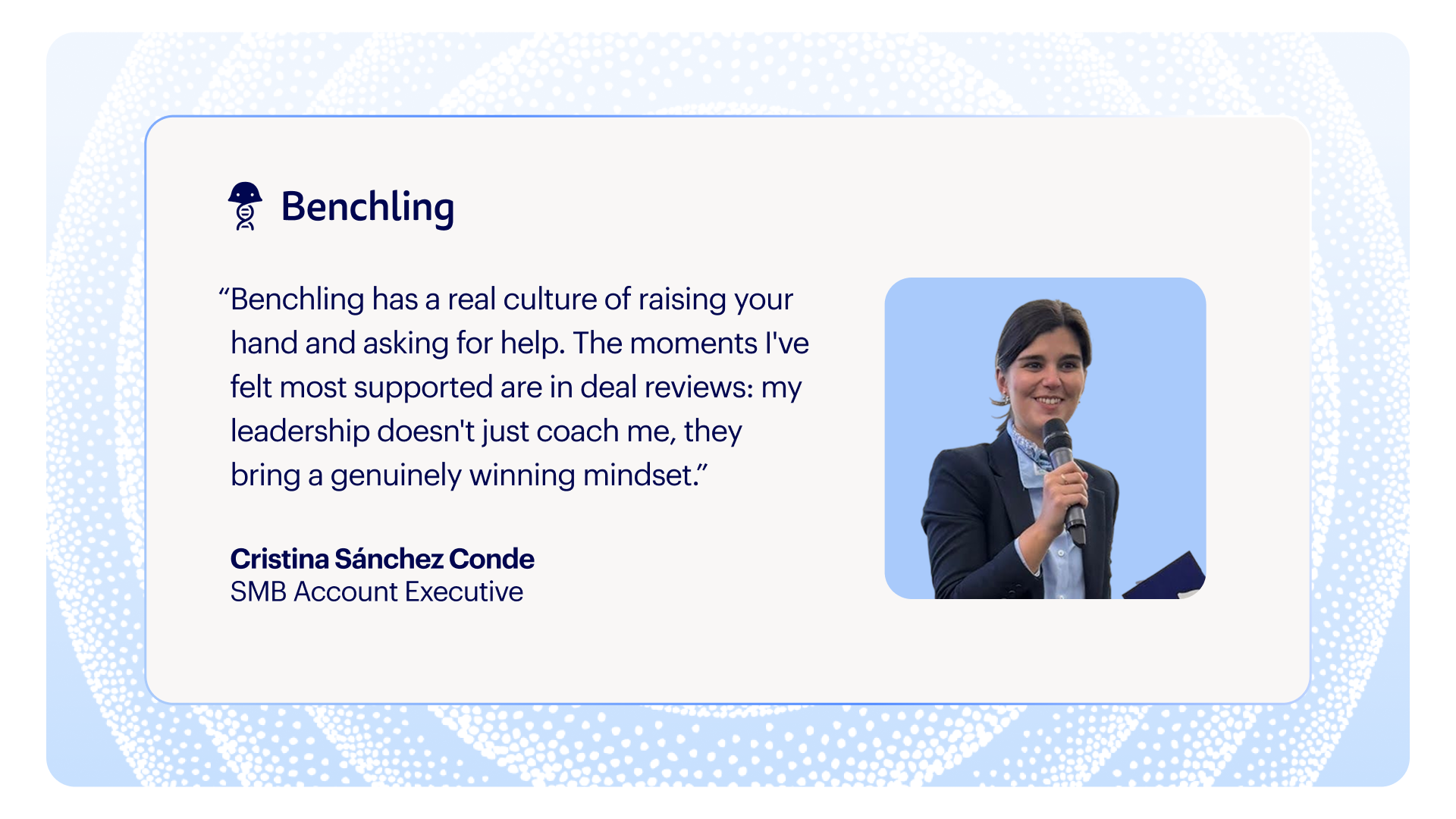
Benchling has a real culture of raising your hand and asking for help. The moments I've felt most supported are in deal reviews: my leadership doesn't just coach me, they bring a genuinely winning mindset. One clear example was the trust my leadership showed in letting me present at the first London Digital Science and Innovation Day. Opportunities to actually try and put yourself out there are rare, and Benchling gave me exactly that.
Samantha Burrell - Solution Consultant - R&D
What does your role look like day-to-day, and what part of the sales process do you own end-to-end?
As an SC, I partner with Account Executives for most of the sales process with ownership over executing Proof of Value (PoV) activities. During my typical week, I'll be meeting with customers early in the sales process to understand pain in their current tech stack/process, goals they are working towards, and map that info back to our solutions. Most of my energy is spent on making the value and differentiation of our platform clear to the customer so they can make the best decision for their needs.
Who shaped how you think about your career, and what did they teach you?
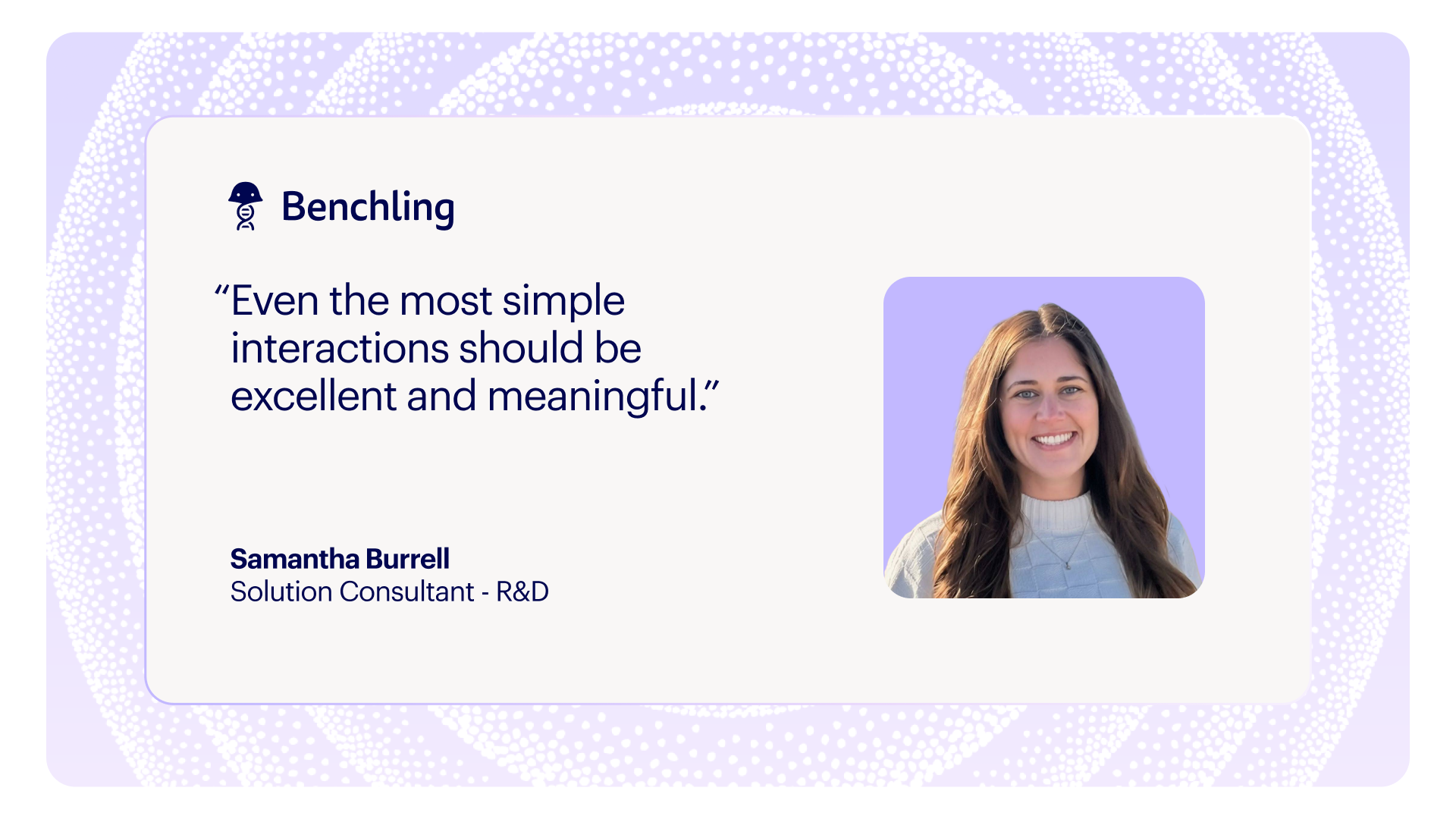
The first AE I was paired with, Debbie Lin, taught me so much about the great partnership between AEs and SCs. She set the foundation of our work as an overall strategy - discussing the WHY behind every action, every message, every click on a screen we were showing to a customer. This level of thoughtfulness showed me that even the most simple interactions should be excellent and meaningful.
Imani Hall - Enterprise Inside Sales Representative
What does your role look like day-to-day, and what part of the sales process do you own end-to-end?
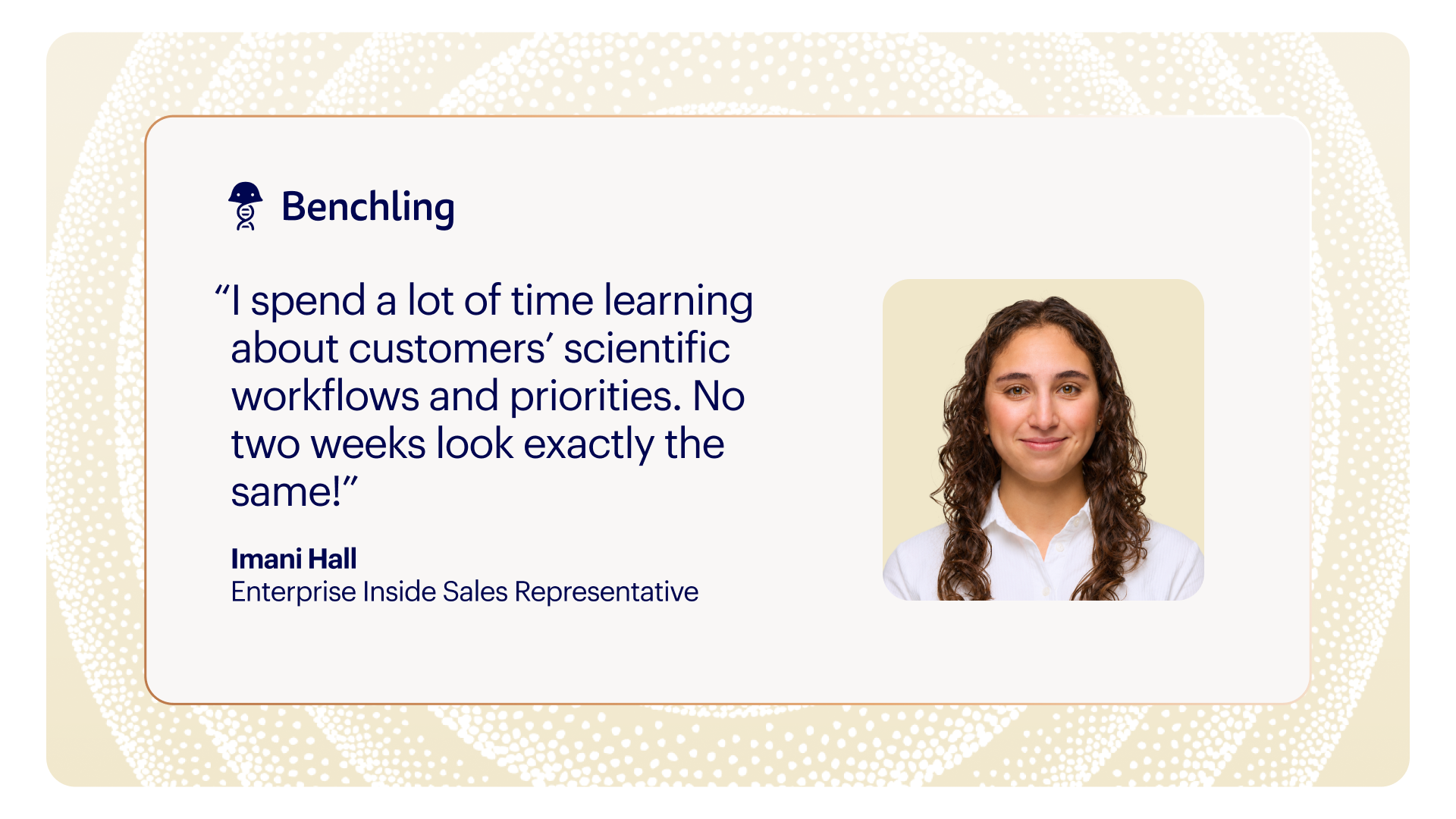
I’m an Enterprise Inside Sales Representative at Benchling, where I partner closely with Account Executives to support our enterprise/global accounts. A lot of my day-to-day revolves around account planning, identifying new opportunities, coordinating outreach across stakeholders, and helping move complex deals forward. I spend a lot of time learning about customers’ scientific workflows and priorities. No two weeks look exactly the same, which is one of the reasons I love it!
How did you get into tech sales, and what’s kept you in it?
I didn’t originally picture myself going into tech sales at all. My background is in neuroscience and psychology, and throughout college I thought I would stay on a more traditional research or clinical path. After years working in a lab, I still loved science deeply, but wanted a career that was more people-oriented and collaborative day-to-day. I was initially drawn to Benchling because of the company’s mission and the impact it has on scientists and R&D teams, and that introduced me to the world of biotech SaaS. What I have come to love about my job is the combination of science, strategy, communication, and relationship-building.
Katia Lin - Enterprise Account Executive
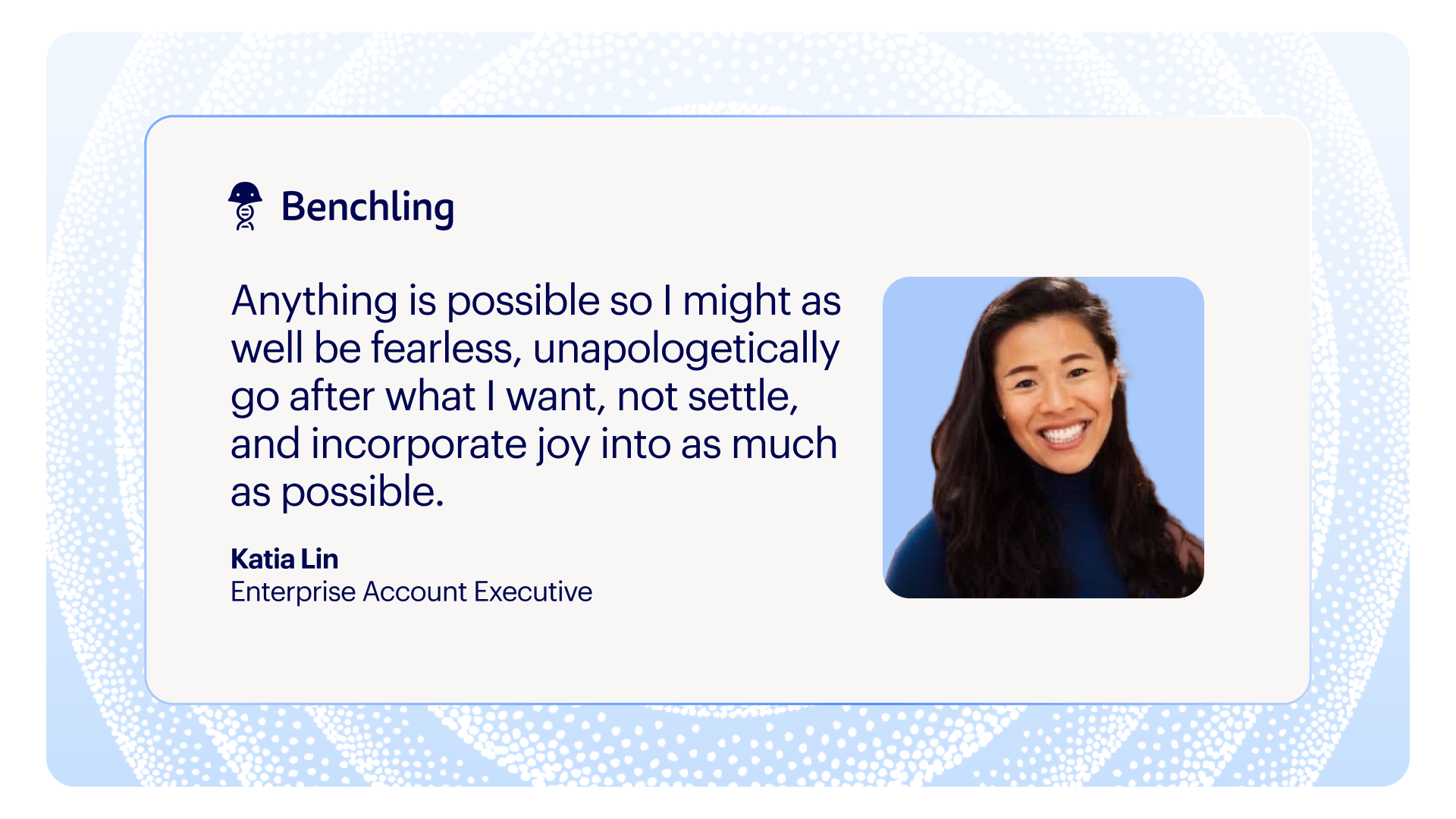
What does your role look like day-to-day, and what part of the sales process do you own end-to-end?
Monday mornings are for internal meetings to debrief the previous week and plan for the week ahead. Monday afternoons are for pipeline generation and determining who at my accounts I need to be speaking with. Tuesdays through Thursdays are for client meetings/workshops: what are my clients’ problems, what are the problems Benchling can solve, what is the impact of the problems, and whether those problems are worth fixing? For the problems that pass that test, we create a plan to address them. Fridays are for wrapping up loose ends and planning for internal meetings on the following Monday.
Who shaped how you think about your career, and what did they teach you?
I lost two very close friends growing up and those two events have had the biggest impact on not just how I think about my career, but how I think about my life. It taught me that anything is possible (including unexpectedly dying), so I might as well be fearless, unapologetically go after what I want, not settle, and incorporate joy into as much as possible.
Vicky McNally - Strategic Account Executive
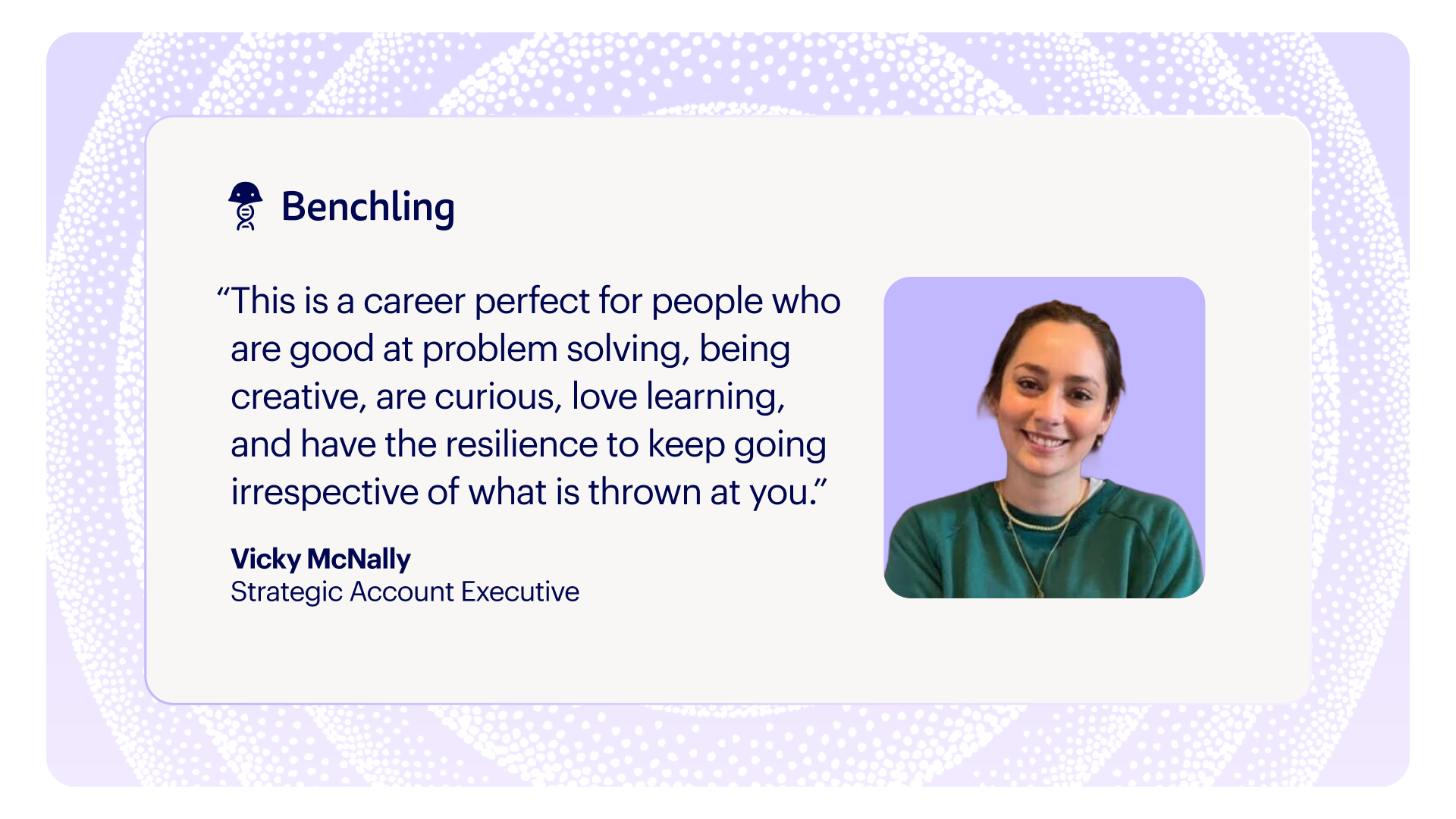
What does your role look like day-to-day, and what part of the sales process do you own end-to-end?
My week rarely looks the same twice. As a Strategic Account Executive, I'm running a portfolio of accounts across the UK, Europe and APAC — some are net new prospects I'm building from the ground up, others are existing customers where I'm helping support with expansion, renewals, and value realization. I'm also the connective tissue between a lot of moving parts: the customer, our implementation team, solutions consultants, legal, and sometimes a partner layer too, so a big part of the job is making sure all of those threads move in sync.
How did you get into tech sales, and what’s kept you in it?
I studied Biology at Bristol University, and spent time in the lab during my MSci year. I had been toying with the idea of doing a PhD, but it was during my MSci year when the harsh reality hit me. I loved theory and learning about how things work, but when it came to being in the lab day in, day out — that wasn't for me.
I needed to find something where I could stay close to science and cutting-edge technology, but in a way that actually energized me, which is when I decided to explore a job in sales. I didn't know much about tech sales, and after being so proud of my academic background, I initially felt like maybe I wasn't doing myself justice. I've since learnt that that's completely the wrong way to look at it. This is a career perfect for people who are good at problem solving, are creative and curious, love learning, and have the resilience to keep going irrespective of what is thrown at you. On a personal level too, I can't think of any other career that would have taken me to the Caribbean, the US, Japan, India, Dubai, Singapore, and all across Europe in just a handful of years.
Ariana Breckner - Leader, SMB AMER
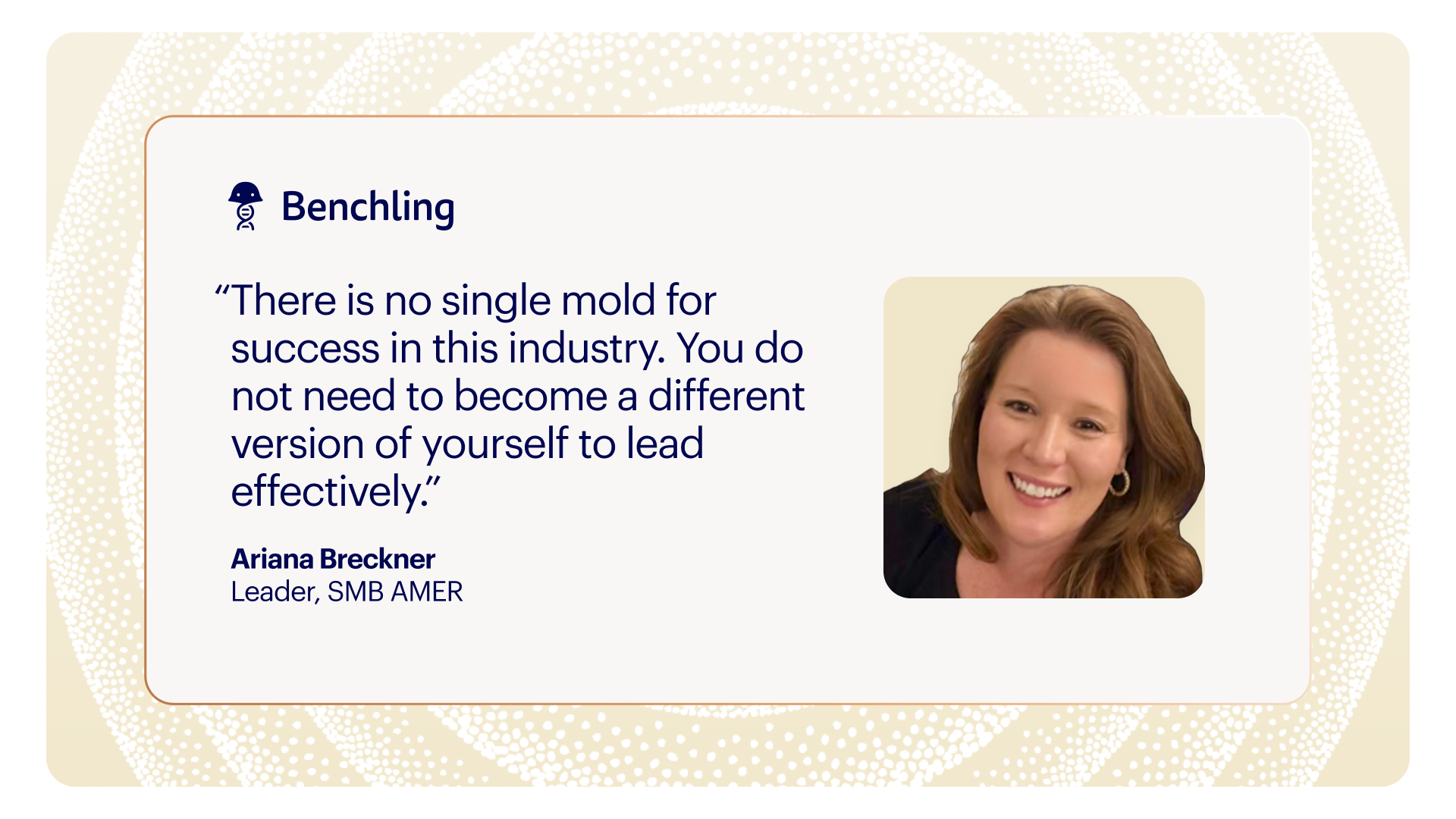
What impact are you trying to make — on customers, on the team, or on other women coming up behind you?
Working at the intersection of sales, STEM, and software means you quickly realize how few women are represented across all three spaces at once. That has made me even more intentional about the kind of leader I want to be and the environment I want to help build.
For the women coming up behind me, I hope they see that there is no single mold for success in this industry. You do not need to become a different version of yourself to lead effectively. Some of the most impactful leadership comes from people who bring both rigor and emotional intelligence into the way they coach, communicate, and build teams.
If you were mentoring a woman just starting in sales, what would you tell her to look for in a company?
Pay attention to how a company helps people learn. Ask questions about onboarding, development, and what happens when someone does not know the answer yet. The way leaders respond to moments of uncertainty will tell you a lot about whether the culture is built around growth or simply survival of the fittest.
Also, look closely at whether leaders invest in people beyond just short-term output. The best managers and mentors I’ve had cared not only about performance, but also about helping people grow into future opportunities and bigger versions of themselves.
I also think it is important to pay attention to how teammates talk about one another. Healthy organizations can still be ambitious and performance-driven while creating environments where knowledge is shared openly, wins are celebrated collectively, and people genuinely want to help each other succeed.
Does this sound like you? Explore sales at Benchling
That's a glimpse into what selling biotech software actually looks like at Benchling. If this sounds like the kind of work — and the kind of team — you want to be part of, we're hiring. Explore open sales roles at Benchling.