Model Hub: Run scientific AI models where your data lives
You find a promising model, but running it means waiting weeks for DevOps to set up the infrastructure to support it. The result then lands in a shared drive, disconnected from the sequence that produced it, so the next scientist has to start from scratch.
Benchling Model Hub closes that gap. It gives every scientist one place inside Benchling to discover, run, and track scientific AI models, with every result wired back into your R&D record. Since the Model Hub launch, we've expanded what it can do: batch predictions, GPU-accelerated alignments, faster structure runs, and API access. It's one piece of a larger shift at Benchling toward connecting agents, models, pipelines, and data into a single system.
The need for this is growing. In Benchling's 2026 Biotech AI Report, protein structure prediction was the second most widely adopted AI use case in R&D at 71%. A growing share of discovery work already runs on scientific AI, and it needs the same connected foundation as everything else in R&D.
One home for every scientific model you run
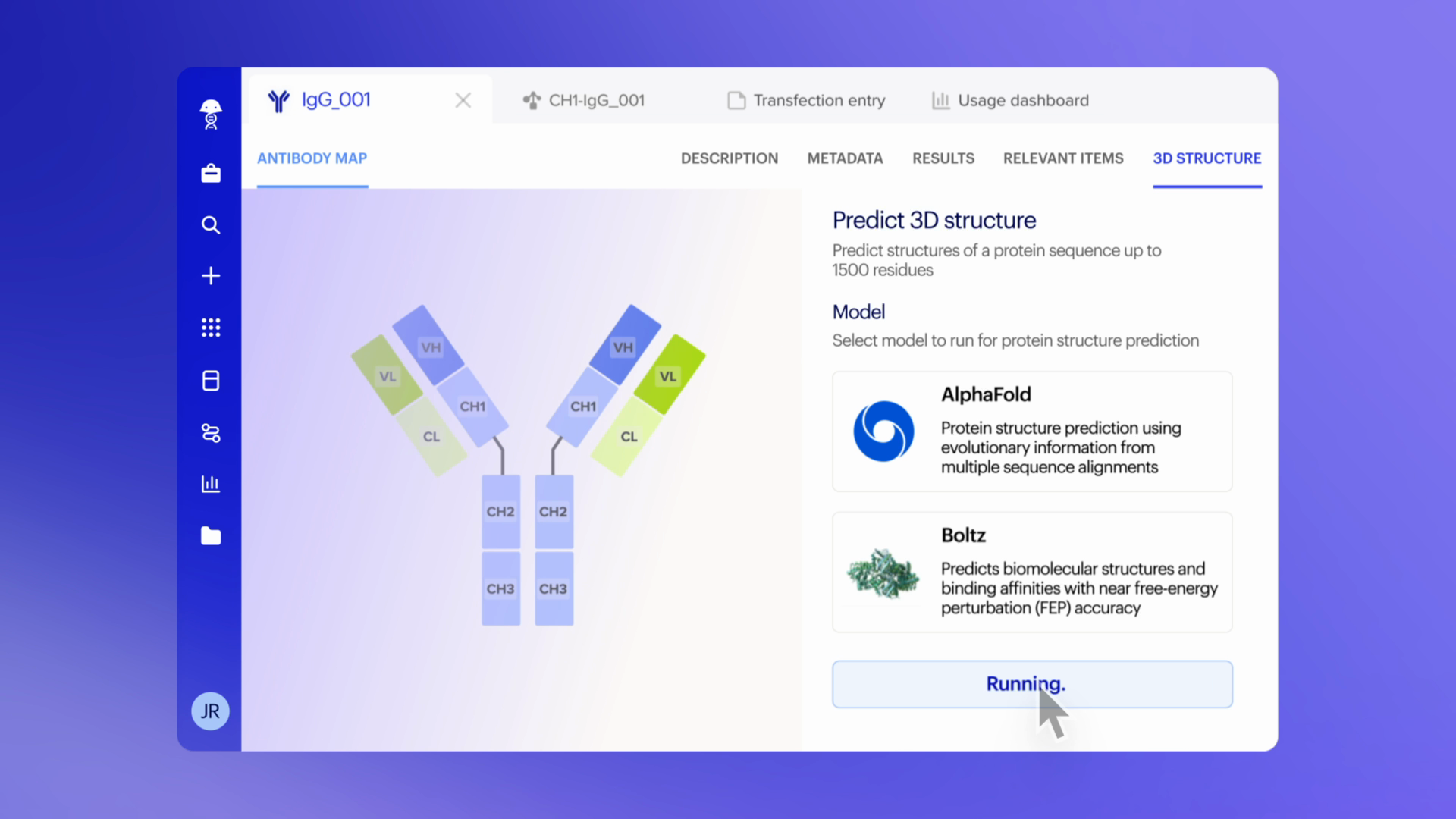
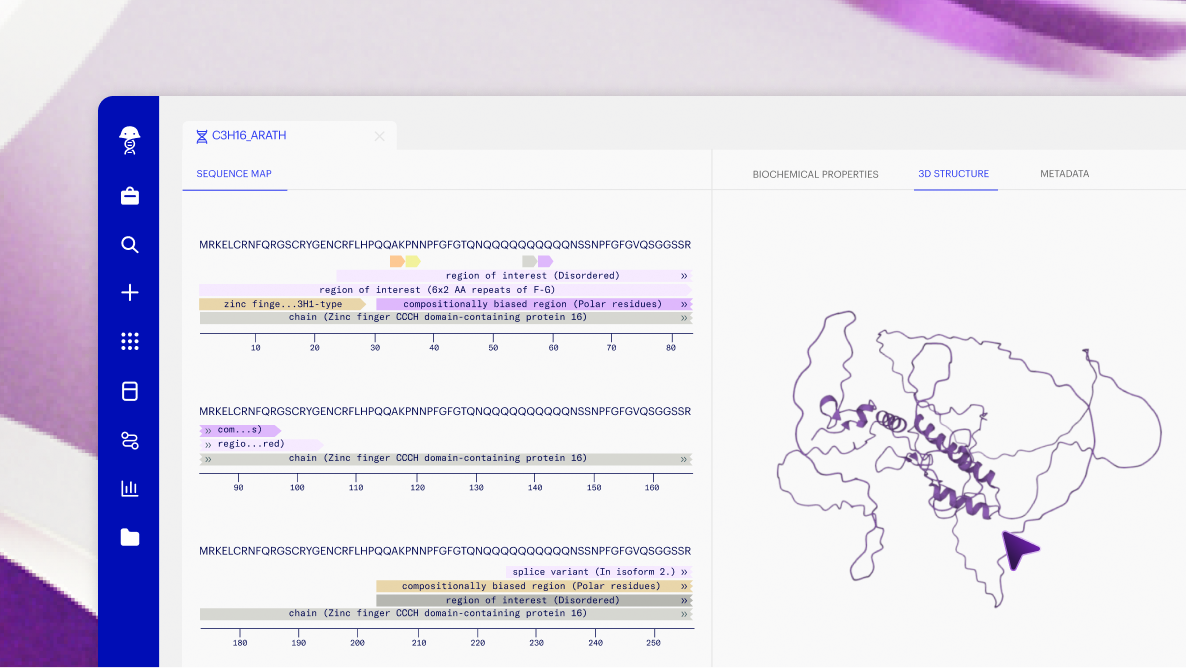
Model Hub is the foundation for the models you run. Results stay tied to the experiment instead of scattering across tools, which reduces context switching between systems. A dedicated icon in the navigation bar opens the hub. From there, you pick your inputs, choose a model, and get structured results with a full audit trail.
Discover models by browsing and comparing them in one catalog, without hunting across point solutions.
Run predictions inside Benchling with no code and no GPU setup.
Track every result back to the R&D record with its inputs, model version, and timestamp.
Model Hub includes structure prediction models today, including AlphaFold 2, Chai-1, Boltz-2, OpenFold 2, OpenFold 3, and Protenix. It also connects you to property prediction models like Lilly TuneLab's proprietary developability models, Inductive Bio for small molecules, and the open-source DeepSP. Generative protein design models and other model types are on the way.
Every prediction becomes fuel for the next model
Model Hub doesn't just answer the question in front of you. Every prediction, structure, and batch run ties back to the experiment it came from, building a connected record of in silico work across your team. That record becomes institutional memory. The more you use Model Hub, the more your record of sequences, predictions, and outcomes reflects your science. Run enough structure predictions against your own proteins, and you've built a dataset that can calibrate and improve the models you use next, specific to the biology your team works on.
Connecting models together
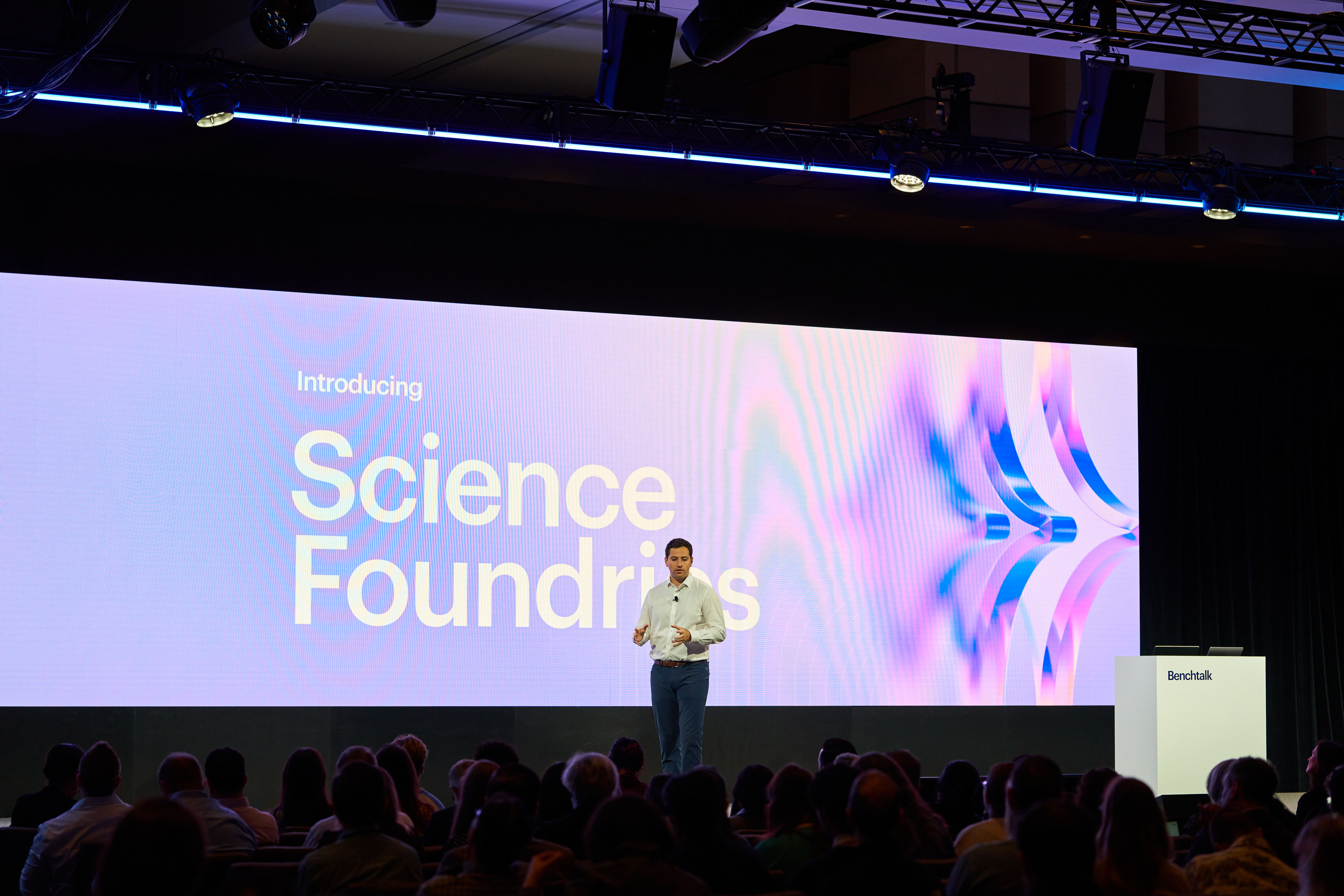
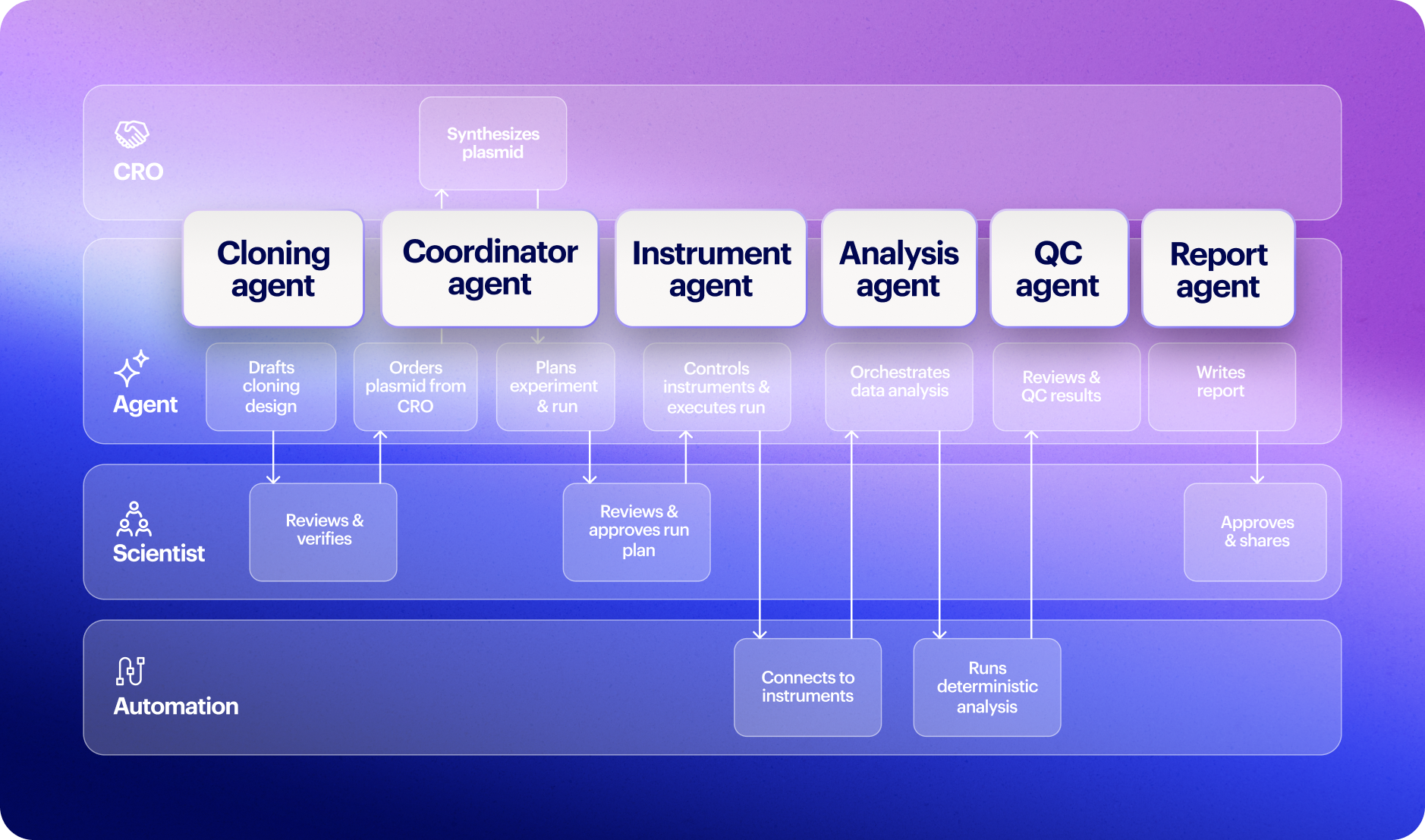
At Benchtalk, the Scientific Models team announced integrations with Benchling Automation, allowing you to create and manage large batch runs of models from pipelines. Using generative models like BoltzGen, you can now generate datasets of potential antibody and protein binders, run property and structure predictions on them, and register your new sequences into Benchling, all from one page. This provides you with a verifiable source of truth for dry lab workflows that involve the latest scientific AI models. Provenance is tracked through to the entity, so you can always find which pipelines and models generated a sequence or biologic. Our vision is for each lab to have its own foundries of scientific intelligence. Read more about how agents, models, and workflows connect into Science Foundries.
Run predictions across hundreds of sequences at once
Running models one at a time doesn't scale, and each isolated run loses its link to the source data. Prediction batches fix that. Select a large set of sequences, choose a model, and submit them all in a single run. Results come back as one organized prediction batch, and every prediction traces back to its source sequence or experiment. You get the scale of hundreds of proteins with the traceability of running models inside Benchling.
Bring predictions into your own workflows with the API
Some teams want to fold predictions into workflows they already run. The v3 alpha API supports that, enabling you to submit prediction jobs, track their statuses, and pull results into your own workflows. Computational teams can automate runs and retrieve results directly in their pipelines, so Model Hub fits the way they already work.
What Benchling Model Hub means for your R&D
Most drug candidates that enter the pipeline never make it out the other side, and every failure costs time and materials. Model Hub gives teams a way to get ahead of that curve, allowing them to run the predictions earlier, see the full picture sooner, and make smarter decisions faster. That's the real value of a connected data model.
Request a demo to explore Model Hub with your own data.